
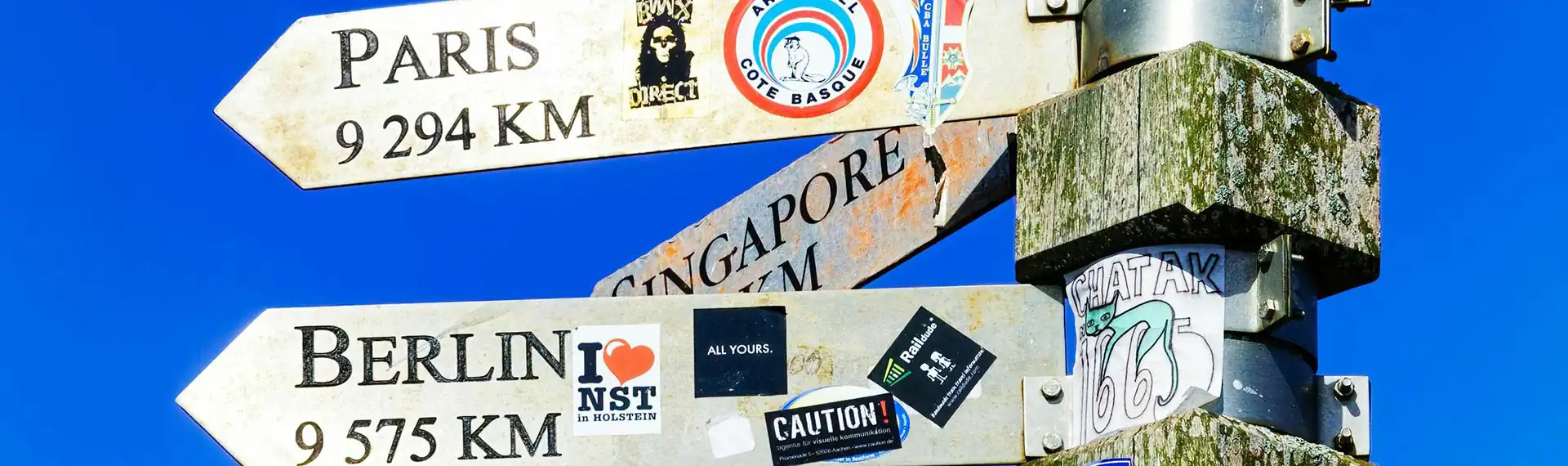
Essential Travel Advice for Backpackers
South Africa — often called "the world in one country" — is a land of staggering contrasts, where rugged mountain treks meet world-class surf breaks and vibrant urban nightlife. To navigate this "Rainbow Nation" like a pro, you'll need more than just a sturdy pair of boots; you'll need a handle on everything from local "load-shedding" schedules and the nuances of the Rand to the unspoken etiquette of a neighbourhood braai. This section is your ultimate survival kit, designed to help you transition from a nervous first-timer to a savvy traveller. Whether you're figuring out the "robots" (traffic lights) on an overlanding mission, checking your pre-flight essentials, or looking for the best volunteering opportunities, the following guide covers the practicalities that keep your journey smooth, safe, and authentically South African.
Preflight Checklists
The things that are tedious to sort out at home become genuinely serious problems when you're standing in an immigration queue at midnight or realising your insurance doesn't cover the activity you just booked. Do these in the six weeks before you leave.
Read More
1. VISAS AND ENTRY
Visa-free entry: Citizens of most Western and Commonwealth countries — UK, USA, EU member states, Australia, Canada, New Zealand — don't require a visa for stays up to 90 days. Confirm your nationality is on the exempt list at the South African Department of Home Affairs website before assuming.
The blank pages rule: South African immigration requires a minimum of two consecutive, completely blank visa pages. This is the most common reason travellers are turned away — not at the border, but at the check-in desk before they even leave home. Check your passport now.
Passport validity: Valid for at least 30 days beyond your planned South Africa departure date. Many airlines apply a stricter 6-month rule — check with your carrier.
Travelling with children: South Africa's anti-trafficking legislation requires any adult travelling with a minor (under 18) to carry an unabridged birth certificate listing both parents. If one parent is absent, a signed parental consent affidavit is required. Border officials and airline staff enforce this rigorously, including when parent and child share a surname.
Proof of onward travel: Have a return ticket or onward booking accessible — in print and digitally. Immigration officials may ask for it.
2. VACCINATIONS AND HEALTH
Yellow Fever certificate: Required if you are arriving from, or have transited for more than 12 hours through, a country with Yellow Fever risk. Without it you will be quarantined or refused entry. Keep the certificate in your passport for the duration of the trip — you may need it at land borders too.
Routine vaccinations: Ensure Tetanus/Diphtheria/Polio and MMR are current. Hepatitis A and Typhoid are strongly recommended — both are food- and water-borne, and backpackers eat in enough informal settings to make the risk real. Consider Rabies if your itinerary includes extended rural areas or wildlife contact.
Malaria prophylaxis: Most of South Africa — including Cape Town, the Garden Route, the Karoo, and the Eastern Cape — is entirely malaria-free. The risk zones are the northeast: Kruger and the Mpumalanga Lowveld, northern Limpopo, and the northern KwaZulu-Natal coast. If your route includes these areas, prophylaxis is not optional. Malarone (Atovaquone/Proguanil) and Doxycycline are the standard options. Avoid Mefloquine (Lariam) — its neuropsychiatric side effects are well documented and safer alternatives exist. Carry a standby curative course of Coartem (artemether-lumefantrine) if you can get a prescription before departure.
Travel clinic appointment: Book at least six weeks before departure to allow time for vaccine courses and for prophylaxis to begin before you enter risk zones.
3. INSURANCE
Private medical cover is non-negotiable. South Africa has excellent private hospitals — Netcare and Mediclinic are world-class — but they require proof of insurance or an upfront cash deposit before treatment begins. Public hospitals are severely overstretched and not where you want to be as a traveller.
Adventure activity rider: Standard policies often exclude high-risk activities. If you plan to bungee jump at Bloukrans (216m, the world's highest), cage dive, skydive, or kite surf, confirm your policy covers it before you book.
Theft cover: Ensure your policy covers electronics and has a per-item limit that actually reflects the value of your gear. Store serial numbers for all devices in a secure cloud location before you leave.
4. LOGISTICS
Notify your bank: South African transactions frequently trigger fraud alerts. Notify your bank of your travel dates and carry at least two cards from different providers — a Revolut or Wise card alongside your standard bank card is the reliable combination.
Download offline maps: Download South Africa on Google Maps or Maps.me before you arrive. Rural signal can be scarce and you will need navigation that works without data.
Safety apps: Download Namola and Secura before you land. Both function as GPS-enabled panic buttons that dispatch emergency services to your location. Set them up before you need them.
Get a local SIM on arrival: Vodacom and MTN have desks at OR Tambo and Cape Town International airports. A local data SIM is significantly cheaper than roaming and essential for navigation, Uber, and emergency apps. Vodacom has better coverage in rural areas.
Print the important things: Your flight itinerary, first hostel address, travel insurance policy number, and emergency contact numbers. Keep the printout folded in your passport.
5. PACKING
Bag size: A 50–65L rucksack with a 20–25L daypack is the right combination. Resist going bigger — the extra capacity becomes extra weight and extra hassle at every bus departure and hostel check-in.
Power adapter: South Africa uses the Type M plug — a large, round three-pin design found almost nowhere else in the world. Buy one before you leave. A 20,000mAh power bank is worth including: loadshedding (scheduled power outages) can leave you without charging for hours.
Clothing: Pack for seven days and use hostel laundry. Key items: moisture-wicking t-shirts, lightweight zip-off trousers, one mid-layer fleece (early morning game drives are cold even in summer), a packable waterproof jacket, and one set of clothes you wouldn't be embarrassed to wear to a restaurant.
Footwear: Trail runners handle Table Mountain, the Drakensberg, and the Tsitsikamma forest without the weight of full hiking boots. Flip-flops for hostels and beaches.
Sun protection: SPF 50+ sunscreen, a wide-brimmed hat, and polarised sunglasses. The UV index regularly hits 11–13 in summer. This is not European sun — treat it accordingly.
Medical kit: Rehydration sachets, Imodium, antihistamines, paracetamol and ibuprofen, antiseptic wipes and plasters, and a digital thermometer. A cotton kikoi doubles as a quick-drying towel, beach blanket, and light layer.
Insect repellent: Peaceful Sleep and Tabard are the reliable local brands, available at every supermarket and pharmacy. For malaria-risk zones, use a product with at least 30% DEET.
Safety
South Africa has one of the highest crime rates in the world. This guide states that plainly, because softening it would be a disservice to every traveller reading it. The good news is that serious violent crime is heavily concentrated in specific communities and contexts far removed from the backpacker circuit. Visitors who understand the geography of risk and follow a consistent set of practical rules travel here without incident every year.
Read More
THE ACTUAL RISK LANDSCAPE
South Africa consistently records among the highest murder and violent crime rates globally for a country not at war. The vast majority of serious violent crime occurs in high-density townships and informal settlements, in the context of gang activity, domestic violence, and extreme socio-economic pressure. The risk to a backpacker staying in established hostels and moving around by Uber is categorically different from the risk profile those statistics describe.
For the average international backpacker, the realistic threats are opportunistic: phone snatching, smash-and-grab vehicle break-ins, ATM fraud, and pickpocketing in crowded spaces. These are unpleasant and can ruin a day. They are rarely violent if you don't resist.
THE UNIVERSAL RULES
Do not walk in urban areas after dark. This is the single most important rule in this guide. Uber and Bolt are cheap, GPS-tracked, and available everywhere cities are. There is no urban journey in South Africa worth walking at night to save the fare. Wait inside the venue for your ride, confirm the car registration matches the app, and do not stand on the pavement with your phone in your hand while you wait.
Keep your phone out of sight. Walking with your phone in your hand signals inattention and marks you as a target. It is the single most common precursor to a snatching. Step into a shop or café to check your map, then go.
Windows up, doors locked, bag on the floor. Smash-and-grab attacks at traffic lights ("robots") are common enough that every South African driver treats them as routine. Keep valuables on the floor, windows up, and doors locked whenever stationary in urban traffic.
Never accept help at an ATM. The well-dressed stranger who appears while you are at the machine is almost certainly attempting to shoulder-surf your PIN or swap your card. Cancel the transaction and walk away without engaging. Use ATMs inside banks or shopping malls, never on the street.
Always physically check your car is locked. Remote-jamming devices in parking areas can prevent your remote signal from reaching the car. Always pull the door handle after locking to confirm the lock has actually engaged.
Leave valuables at the hostel. Your passport, excess cash, and expensive electronics should stay in the safe when you head out in cities. Take only what you need for the day.
The dummy wallet. Keep a second wallet with R100–200 in small notes and an expired card. If you are robbed, hand it over immediately and without resistance. Do not resist a mugging under any circumstances — possessions can be replaced.
Trust your gut. If a local tells you not to go somewhere, they mean it. The instinct to give situations the benefit of the doubt is worth suppressing when something feels wrong in an unfamiliar urban environment here.
CAPE TOWN
Cape Town's safety geography is sharply defined. The City Bowl, Green Point, Sea Point, De Waterkant, the V&A Waterfront, the Peninsula, and Camps Bay are broadly safe by day and manageable at night if you use Uber between venues.
The Cape Flats — Khayelitsha, Gugulethu, Nyanga, Manenberg, Mitchells Plain — have some of the highest violent crime rates in the country. Township tours run by reputable operators with local guides are a legitimate and worthwhile experience; walking these areas independently is not something this guide recommends.
Long Street after midnight becomes a reliable hunting ground for pickpockets and "hugger" muggers. Enjoy the bars; use Uber to leave.
The Foreshore after hours: The CBD empties completely after 6pm and becomes high-risk for pedestrians. Avoid walking through it alone at night.
Table Mountain trails: The popular routes — Platteklip Gorge, Lion's Head, the Pipe Track — are generally safe in groups during daylight. Apply the Rule of Four (see Hiking Safety below).
Metrorail: Avoid Cape Town's commuter rail network. Lines are unreliable, security is poor, and incidents targeting passengers are frequent. The MyCiTi bus and Uber cover the tourist circuit adequately.
JOHANNESBURG
Joburg requires a hub-and-spoke approach: choose a safe base and travel between points by Uber or Gautrain rather than on foot. The best bases for backpackers are Melville (7th Street — bohemian, walkable, university atmosphere), Maboneng (regenerated CBD precinct — safe within the designated blocks), and Rosebank (affluent, Gautrain-connected).
Areas to avoid independently: Hillbrow, Berea, and Yeoville are high-risk for independent exploration on foot. The CBD is best explored via the Red Bus hop-on/hop-off or with a guide.
Gautrain: World-class, safe, and air-conditioned. Use it between Sandton, Rosebank, and OR Tambo Airport.
DURBAN
The backpacker areas are in the leafy northern suburbs. Good bases: Morningside and Florida Road (main dining and nightlife strip), Glenwood (quieter, artsy). The beachfront is lively and safe during the day — head back to Florida Road for the evening. The CBD and Victoria Embankment are not safe for independent pedestrian exploration; Warwick Junction is worth visiting only with a reputable guided walking tour.
ROAD SAFETY
Statistically, a road accident is significantly more likely to harm you than a crime. South Africa has one of the highest road fatality rates in the world.
Do not drive after dark. Rural roads at night carry unlit trucks, livestock sleeping on warm tarmac, severe potholes, and drunk drivers. If you cannot complete your journey before dark, stop for the night.
Minibus taxis: Drivers regularly work extreme hours, vehicles are often poorly maintained, and the driving culture is aggressive. Fine for short city hops in daylight — not recommended for long-distance travel.
Tyre spiking: Placing debris on highways to burst tyres and rob stranded drivers is an established crime on some major routes. If you get a puncture at night on an isolated stretch, drive at low speed to the nearest fuel station rather than stopping on the road.
Loadshedding and traffic signals: Power outages take out traffic signals and all street lighting. Treat dead traffic lights as four-way stops.
HIKING SAFETY
The Rule of Four: Never hike alone. Couples are targeted on mountain trails; groups of four or more are almost never approached. On Table Mountain's popular routes, join another group before heading up if yours is small.
Download Namola: The panic button sends your GPS coordinates to emergency services — including mountain rescue — with a single press. Set it up before you hike.
SCAMS
The ATM helpful stranger is the most common tourist scam in the country. Cancel the transaction and walk away the moment anyone approaches.
Remote jamming in parking areas: Always physically check the door handle before walking away from your vehicle.
Car guards: Tip only when you return to your car (R5–R10), never when you park.
Street cannabis dealers: These interactions frequently escalate into robberies or police shake-downs. Walk away.
SEXUAL HEALTH AND SAFETY
South Africa has the largest HIV epidemic in the world — approximately 13–14% of the total population lives with the virus. Condoms are non-negotiable for any sexual contact. Carry your own.
PrEP reduces HIV transmission from sex by approximately 99% when taken consistently. If you believe you have been exposed to HIV, go immediately to a Netcare or Mediclinic emergency room for PEP — it must begin within 72 hours.
Drink spiking is a documented risk in busy city venues. Never leave your drink unattended and never accept a drink from a stranger that you didn't watch being poured directly to you.
Marie Stopes South Africa provides discreet sexual health services including STI testing and PrEP: 0800 11 77 85.
Money & Budgeting
South Africa has the most sophisticated banking infrastructure on the African continent. In Cape Town, Johannesburg, and along the Garden Route, you can tap your phone to pay for a coffee, split a bill via QR code, and withdraw rand from a bank-grade ATM in any shopping mall. In the rural Wild Coast or a Karoo town on a Sunday evening, none of that works. Plan for both realities.
Read More
CURRENCY AND EXCHANGE RATE
The currency is the South African Rand (ZAR, symbol R). As of early 2026 the rate is approximately R20 to €1 — a rate that has been broadly stable, though the Rand is a volatile emerging-market currency. Track live rates at xe.com. Do not exchange currency at airport bureaux de change — the margins are poor. Use an ATM on arrival or a Revolut/Wise card.
ATMS
ATMs accepting international Visa and Mastercard are ubiquitous in cities and shopping centres. In rural areas, draw enough before heading out to cover two or three days of expenses.
Capitec Bank ATMs charge no fee to foreign cards and allow withdrawals of up to R5,000 per transaction — by far the best option for international visitors. Most other South African bank ATMs charge R50–R75 per transaction.
Dynamic Currency Conversion: If an ATM asks whether you want to pay in your home currency, always choose rand. DCC applies a poor exchange rate — it is an avoidable fee dressed up as a convenience.
ATM safety: Use machines inside banks or shopping malls — never freestanding street ATMs. Cover the keypad when entering your PIN. If someone approaches, cancel the transaction and walk away.
CARDS AND DIGITAL PAYMENT
South Africa is highly card-friendly in urban and tourist areas. Contactless tap-and-pay works at the vast majority of restaurants, shops, hostels, and petrol stations. Two local QR-code payment apps are worth downloading: SnapScan and Zapper — used extensively at markets and smaller venues. Having both ensures coverage.
Carry two cards from different providers. A Revolut or Wise card alongside your standard bank card is the reliable combination — fintech cards are rarely blocked and apply the interbank exchange rate.
Card cloning: Never let your card be taken out of your sight. Ask for the mobile terminal to be brought to the table if a waiter says the machine is "at the back."
CASH AND WHEN YOU NEED IT
Cash is essential for rural fuel stations, car guards, petrol station attendants, and township markets. Keep R200–R500 in small notes (R10s and R20s) accessible at all times — large notes are sometimes refused at small vendors who cannot make change.
BUDGETING
A comfortable backpacker budget runs to approximately €45–€55 per person per day for two people sharing a hire car — covering dorm accommodation, a mix of self-catering and restaurant meals, fuel, and a moderate level of paid activities. The main budget variable is activities: the Bloukrans bungee (approx. R1,600/€80), Kruger entry (approx. R580/€29 per day), cage diving (approx. R2,200/€110). Budget for these specifically. Detailed per-day cost breakdowns for each route are in our itineraries section.
TIPPING
Tipping is a genuine social obligation in South Africa — service industry wages are low and staff depend on tips to make a living wage.
Restaurants: 10–15% is standard and expected. Check the bill for a mandatory service charge on large tables.
Petrol station attendants: South Africa has no self-service fuel. Tip R5–R10 for a standard fill-up; R10–R20 if they've done a full service. Have small notes in the car.
Car guards: R5 for a short stop; R10–R20 for longer or at night. Tip when you return, not when you park.
Safari rangers: R150–R300 per person per day at private reserves; R75–R150 per person at SANParks.
Medical
This section is general travel health guidance, not a substitute for professional medical advice. Consult a qualified travel clinic at least six weeks before departure.
Read More
1. HIV AND SEXUAL HEALTH
South Africa has the largest HIV epidemic in the world — approximately 8 million people living with the virus, around 13% of the total population. Condom use for any sexual contact is non-negotiable.
PrEP: Daily oral PrEP reduces HIV transmission from sex by approximately 99% when taken consistently. The injectable Lenacapavir — twice-yearly, near-100% efficacy — is increasingly available in 2026. Discuss both options with your doctor or travel clinic before departure.
PEP: Must begin within 72 hours of potential HIV exposure. Go immediately to a Netcare or Mediclinic emergency room. Do not wait. There are no early symptoms and the 72-hour window is absolute.
Marie Stopes South Africa — STI testing, PrEP, emergency contraception: 0800 11 77 85.
2. MALARIA
The majority of South Africa is malaria-free — this includes Cape Town, the Western Cape, the Garden Route, the Karoo, and the Eastern Cape. The risk zones are the northeastern lowlands: Kruger and the Mpumalanga Lowveld, northern Limpopo, and the northern KwaZulu-Natal coast.
Malarone is the most widely prescribed option. Doxycycline is effective and cheaper but increases photosensitivity significantly. Avoid Mefloquine — safer alternatives exist. Do not use Artemisia tea as a preventative: the active compound washes out within hours and does not provide meaningful protection.
Prevention basics: Anopheles mosquitoes are most active at dusk, through the night, and at dawn. Wear long sleeves and trousers from dusk. Use repellent with at least 30% DEET — Peaceful Sleep and Tabard are effective local brands. Sleep under a net where provided.
3. VACCINATIONS
Ensure routine vaccinations are current: Tetanus/Diphtheria/Pertussis, Polio, and MMR. Hepatitis A and Typhoid are strongly recommended for backpackers. Rabies is worth considering for extended rural travel. Keep your Yellow Fever certificate in your passport throughout the trip — you may need it at land borders.
4. SUN AND HEAT
The UV index regularly hits 11–13 in summer. At altitude (Johannesburg sits at 1,750m, the Drakensberg plateau at 3,000m+) UV intensity is higher still. SPF 50+ sunscreen, a wide-brimmed hat, and a light long-sleeved shirt during the hottest part of the day are genuine necessities. Tap water is safe to drink in all major cities and most small towns.
5. BILHARZIA
A parasitic infection carried by freshwater snails in slow-moving water in the warmer provinces. Avoid swimming in rivers, dams, and lake margins in KwaZulu-Natal, Limpopo, and Mpumalanga. Fast-flowing mountain streams in the Western Cape and high Drakensberg are generally safe.
6. TICK-BITE FEVER
Common among people who walk in bush or long grass, particularly in KwaZulu-Natal and Limpopo. Symptoms appear several days after the bite: severe headache, muscle pain, and an eschar (small sore with a black crusty centre) at the bite site. Straightforwardly cured with Doxycycline. Check your body and clothing thoroughly after walking in bush.
7. SNAKES
Encounters are rare and bites rarer still. The exception is the Puff Adder — a fat, heavy-bodied snake with bold yellow-and-black chevron markings that relies entirely on camouflage and does not move away. It is responsible for the majority of serious snakebites in the country. Watch where you put your feet in long grass and on rocky paths at dawn and dusk.
Other species to know: Black Mamba (olive to gunmetal grey — fast, nervous, only strikes if cornered), Cape Cobra (variable colour, broad hood — frequently enters campsites following rodents), Mozambique Spitting Cobra (can spit venom into eyes from 2 metres), Boomslang (large eyes, often bright green in males — rare bite but extremely dangerous venom).
If bitten: Keep the victim calm and still. Immobilise the affected limb below heart level. Get to hospital as quickly as possible. Do not cut the wound, suck out venom, or apply a tourniquet. Photograph the snake from a safe distance if possible — it helps identify the correct antivenom.
TRAVEL CLINICS
Netcare Travel Clinics — netcare.co.za
Sandton: +27 11 802 0059 | Cape Town Waterfront: +27 21 419 3172 | Umhlanga: +27 31 582 5302
The Travel Doctor — traveldoctor.co.za | 0861 300 911
Johannesburg (Rosebank): +27 10 900 3013 | Cape Town (Oranjezicht): +27 87 183 6207 | George: +27 44 874 1772
Embassies
Most embassies are in Pretoria. Consulates-General handling day-to-day citizen services — passport replacement, emergency travel documents — are typically in Cape Town or Johannesburg. If your passport is stolen, contact your embassy's emergency line first and get a SAPS Case Number before calling, as you will need it before they can issue a replacement document.
Read More
DIPLOMATIC MISSIONS IN SOUTH AFRICA
ARGENTINA — Embassy, Pretoria
200 Standard Plaza, 440 Hilda Street, Hatfield, 0083
+27 12 430 3524 | emsudafrica@mrecic.gov.ar
AUSTRALIA — High Commission, Pretoria
292 Orient Street, Arcadia, 0083
+27 12 423 6000 | ahc.pretoria@dfat.gov.au
BRAZIL — Embassy, Pretoria
152 Dallas Avenue, Corobay Corner Building, 4th Floor, Waterkloof Glen, 0181
+27 12 366 5200 | pretoria@itamaraty.gov.br
CANADA — High Commission, Pretoria
1103 Arcadia Street, Hatfield, 0083
+27 12 422 3000 | pret@international.gc.ca
CHINA — Embassy, Pretoria
225 Athlone Street, Arcadia, 0083
+27 12 431 6500 | chinaemb_za@mfa.gov.cn
CZECH REPUBLIC — Embassy, Pretoria
936 Pretorius Street, Arcadia, 0083
+27 12 431 2380 | pretoria@embassy.mzv.cz
FRANCE — Embassy, Pretoria
250 Melk Street, Nieuw Muckleneuk, 0181
+27 12 425 1600 | contact@ambafrance-rsa.org
GERMANY — Embassy, Pretoria
201 Florence Ribeiro Avenue, Groenkloof, 0181
+27 12 427 8900
INDIA — High Commission, Pretoria
852 Frances Baard Street, Arcadia, 0083
+27 12 342 5392 | hci@iafrica.com
IRELAND — Embassy, Pretoria
2nd Floor, Parkdev Building, Brooklyn Bridge, 570 Fehrsen Street, 0181
+27 12 342 0606
ISRAEL — Embassy, Pretoria
428 King's Highway, Lynnwood, 0081
+27 12 470 3500 | info@pretoria.mfa.gov.il
ITALY — Embassy, Pretoria
796 George Avenue, Arcadia, 0083
+27 12 423 0000
JAPAN — Embassy, Pretoria
259 Baines Street, Groenkloof, 0181
+27 12 452 1500
LITHUANIA — Embassy, Pretoria
235 Grosvenor Street, Hatfield, 0028
+27 12 760 9000 | amb.za@urm.lt
MEXICO — Embassy, Pretoria
Parkdev Building, Brooklyn Bridge, 570 Fehrsen Street, 0181
+27 12 460 1004 | embamex@mexico.org.za
NETHERLANDS — Embassy, Pretoria
210 Florence Ribeiro Avenue, Groenkloof, 0181
+27 12 425 4500
NEW ZEALAND — High Commission, Pretoria
125 Middel Street, Nieuw Muckleneuk, 0181
+27 12 435 9000 | nzhc.pretoria@mfat.govt.nz
PORTUGAL — Embassy, Pretoria
599 Leyds Street, Muckleneuk, 0002
+27 12 341 2340 | pretoria@mne.pt
RUSSIA — Embassy, Pretoria
Butano Building, 316 Brooks Street, Menlo Park, 0102
+27 12 362 1337 | ruspospr@mweb.co.za
SOUTH KOREA — Embassy, Pretoria
265 Melk Street, Nieuw Muckleneuk, 0181
+27 12 460 2508 | southafrica@mofa.go.kr
SPAIN — Embassy, Pretoria
Lord Charles Building, 337 Brooklyn Road, Brooklyn, 0181
+27 12 460 0123 | emb.pretoria@maec.es
SWEDEN — Embassy, Pretoria
iParioli Complex, 1166 Park Street, Hatfield, 0083
+27 12 426 6400 | ambassaden.pretoria@gov.se
SWITZERLAND — Embassy, Pretoria
225 Veale Street, Parc Nouveau, New Muckleneuk, 0181
+27 12 452 0660
UNITED KINGDOM — British High Commission, Pretoria
255 Hill Street, Arcadia, 0002
+27 12 421 7500
UNITED STATES OF AMERICA — U.S. Embassy, Pretoria
877 Pretorius Street, Arcadia, 0083
+27 12 431 4000
Cannabis & The Law
Cannabis — known locally as dagga — occupies a genuinely ambiguous legal position in South Africa, and that ambiguity is the source of most of the trouble visitors get into. You will almost certainly be told by South Africans that it is legal. That is not quite accurate, and the gap between "not quite accurate" and "accurate" is the gap between a fine, a bribe demand, or a night in a South African police cell.
Read More
WHAT THE LAW ACTUALLY SAYS
In 2018 the Constitutional Court decriminalised the private use, possession, and cultivation of cannabis by adults — in a private place. That is the extent of the legalisation. Everything else remains illegal. Buying and selling dagga is still a criminal offence. Public consumption is illegal. Possession of "private" quantities has no defined limit in statute, leaving discretion with the arresting officer — exactly the kind of grey area in which corrupt policing thrives.
THE REALISTIC RISK FOR TRAVELLERS
The SAPS has far bigger priorities than arresting tourists for dagga. In practice, many South Africans smoke openly in semi-public spaces and are never arrested. But "generally" is doing a lot of work in that sentence. Three scenarios move a traveller from "generally fine" to genuinely in trouble quickly.
The corrupt officer finds dagga on a foreign tourist and has found a reliable revenue stream. The offer of an informal "fine" paid in cash is extortion, it is illegal, and it works because the traveller wants it over. You are more vulnerable than a local because you don't know the system and you have a flight to catch.
The blitz: Periodic police operations specifically targeting cannabis do happen. When they do, the usual tolerance disappears and people are arrested and processed.
If you are actually arrested: You do not want to spend even one night in a South African police holding cell. They are overcrowded and frequently dangerous — not comparable to a European police station.
PRACTICAL RULES FOR TRAVELLERS
Never carry dagga on your person in public. Whatever you choose to do in the privacy of a hostel room or private home falls within the spirit of the 2018 ruling. The moment you are on the street with it, you are exposed.
Never buy from a street dealer. Street transactions have a well-documented pattern of escalating into robberies, or into shake-downs involving a dealer working in concert with a nearby police officer.
Respect hostel policies absolutely. Ask before you light up. Smoking in your dorm room is a reliable way to be asked to leave at midnight with your bags.
Never drive under the influence. A positive roadside test voids your hire car insurance entirely, in addition to the criminal exposure.
Never attempt to cross a border with dagga. Not into Namibia, Botswana, Zimbabwe, Mozambique, or anywhere else. Border searches are real and thorough, and the consequences in neighbouring countries can include lengthy mandatory sentences.
If stopped by police and dagga is found: Stay calm, be polite, and do not make any payment on the spot. Ask clearly to speak to a senior officer and ask for the officer's name and badge number — this request alone frequently ends an attempted extortion. Contact your embassy if taken to a station.
FROM THE HORSE'S MOUTH
In case you have any doubts, here is what the law actually says:
In South Africa, adult cannabis use is governed by the Cannabis for Private Purposes Act (Act 7 of 2024). Under this legal framework, adults aged 18 or older are legally permitted to possess, cultivate, and consume cannabis strictly within a private place for personal use. However, the law draws a rigid boundary at the garden gate: buying, selling, or trading cannabis for any form of cash, goods, or favors remains a serious criminal offense. Public consumption is also strictly illegal, meaning lighting up on beaches, in streets, or outside hostels can still result in immediate arrest.
To see the statutory framework directly from the official source, you can review the complete piece of legislation published in the national repository via the South African Government Gazette.
So whatever some random stranger says to the contrary, they're wrong. Stay safe - you do not want to get locked up in South Africa, it'd ruin your holiday.
Useful Apps & Websites
Download and set up the apps in the safety and transport categories before you land — not when you need them.
Read More
SAFETY
Namola: A single button press sends your GPS coordinates to the nearest emergency responders — police, ambulance, and mountain rescue. Free. Set it up and grant location permissions before you need it.
Secura: Similar panic-button functionality with broader private security dispatch coverage in smaller towns and rural areas. Subscription-based. Worth having both apps — coverage varies by region.
SharkSmart: Real-time shark sighting alerts and beach status for the Western Cape coast. Check before entering the water anywhere between Cape Town and Mossel Bay. Free.
TRANSPORT AND NAVIGATION
Uber and Bolt: GPS-tracked, driver-rated, and significantly safer than hailing an unknown vehicle. Bolt is often cheaper. Always check the vehicle registration matches the app before getting in.
Waze: Better than Google Maps for South African road conditions — real-time alerts on potholes, speed cameras, loadshedding-related signal outages, and road closures.
Google Maps offline: Download the South Africa map before you arrive. Rural signal is unreliable in the Drakensberg, Wild Coast, and Northern Cape.
Baz Bus: Booking portal for the backpacker hop-on-hop-off service between Cape Town, the Garden Route, and Gqeberha. Book seats at least 72 hours ahead in peak season (December to February).
MONEY AND PAYMENTS
SnapScan and Zapper: QR-code payment apps used extensively at markets, independent cafes, and smaller venues. Download and link your card before arrival.
XE Currency: Live Rand exchange rates. The Rand is volatile and tracking it matters when deciding how much to draw.
Revolut / Wise: Carry one alongside your standard bank card — both apply the interbank rate and rarely get blocked by fraud alerts.
ACCOMMODATION AND BOOKING
Hostelworld and Booking.com: The most reliable booking platforms, though many hostels aren't listed — which is why we've provided full contact details in each regional section of this guide.
SANParks: The official booking portal for national park accommodation — Kruger, Addo, Tsitsikamma, and all other SANParks reserves. Kruger rest camps book up months in advance for peak season.
CONNECTIVITY
Airalo: eSIM provider — download a South Africa data eSIM before you arrive for data from the moment you land. For longer trips, a physical Vodacom or MTN SIM bought at the airport will be cheaper with better rural coverage.
Vodacom / MTN SIMs: Both networks have desks at OR Tambo and Cape Town International airports. Vodacom has better coverage in rural areas. WhatsApp is the primary communication method for booking accommodation and transport throughout the country.
COMMUNITIES AND RESEARCH
South Africa Travel & Backpacking (Facebook): Active community sharing real-time advice on road conditions, border crossings, hostel recommendations, and lift-sharing. Particularly useful for Wild Coast road conditions after rain.
Backpackers South Africa (Facebook): Geared toward the hostel circuit. The best place to find lift-shares between major towns.
South African Tourism: Most useful for regional event calendars and verifying whether attractions are currently open — park closures, seasonal access restrictions, and major event dates are reliably listed here.
 SHARE
SHARE