Welcome to my backpacking guide to Madrid!

Discover more

Backpacking Madrid

[mah-DREED]

Every backpacker doing Spain asks the same question eventually: Madrid or Barcelona? It's the wrong question. Madrid isn't trying to be Barcelona and never has been — no beach, no Gaudí, no seaside glamour. What it has instead is arguably the best tapas culture in the country, three of the finest art museums on Earth within walking distance of each other, and a nightlife scene so unapologetically nocturnal that Madrileños have a specific verb, trasnochar, just for staying out until sunrise. Skip it because you've already "done" a Spanish capital, and you'll have skipped the city most Spaniards will quietly tell you is actually their favourite.

For backpackers coming from the UK or elsewhere in Western Europe, Madrid works brilliantly as either a first stop or a hub — sitting dead centre of the country, every high-speed AVE train line in Spain radiates outward from here, which makes it the easiest base for day trips in the entire country. The historic centre is compact and genuinely walkable, without the single mega-attraction queue that defines a lot of Barcelona's tourist experience — Madrid rewards wandering rather than ticking off a list. Dinner runs even later here than in the rest of Spain; don't be surprised to see restaurants only just filling up at 10:30pm.

Budget-wise, here's the pleasant surprise: Madrid is, on the whole, cheaper than Barcelona for backpackers. Dorm beds, tapas, and metro tickets are all noticeably kinder to your wallet, and the tradition of a free tapa with your drink — genuinely free, not a tourist gimmick — still survives in plenty of traditional bars around La Latina and Malasaña. If Barcelona stretched your budget, Madrid is where it recovers.

Read More

What Kind of Place Is This, Exactly?

Madrid sits at the exact geographic centre of the Iberian Peninsula, and at around 650 metres above sea level, it's the highest capital city in the European Union — a fact that shapes everything from its famously clear blue skies to its brutal climate extremes. Locals sum up their weather with a well-worn saying: nueve meses de invierno y tres de infierno — "nine months of winter and three of hell." It's the seat of the national government and the Spanish royal family, and the city itself forms the bulk of its own single-city-dominated autonomous region, the Community of Madrid.

A Short History: From Minor Fortress to Imperial Capital

Madrid began as an unremarkable 9th-century Muslim-era fortress town called Mayrit, guarding a river crossing of no particular significance. Its rise to capital city is a genuinely odd piece of history: in 1561, King Philip II chose it as the seat of his court largely because it was geographically central and — crucially — politically neutral, tied to no existing noble power base the way Toledo or Valladolid were. A minor garrison town became an imperial capital almost by administrative accident.

The Habsburg era gave Madrid its historic core, including the Plaza Mayor; the Bourbon king Charles III, still fondly remembered as "the best mayor Madrid ever had," modernised the city and founded the Prado. The 20th century was brutal — Madrid was the Republican capital during the Spanish Civil War and endured a punishing siege and heavy bombing between 1936 and 1939, memorialised in the defiant Republican slogan "No pasarán" ("They shall not pass"). After decades of Franco-era repression, the years immediately following his death in 1975 produced the movida madrileña — an explosive counter-culture movement of art, music, and nightlife that is, quite directly, the reason Madrid's nightlife reputation exists today.

The Language You'll Hear

Castilian Spanish, spoken here in what's often considered the "standard" accent of the language, with none of the regional-language complexity of Catalonia or the Basque Country. English is spoken in hostels and major tourist spots but genuinely less widely than in Barcelona — Madrid has historically drawn fewer international tourists relative to its size, though that's changing fast. A little effort with Spanish goes further here and is noticeably appreciated.

Understanding Madrid: The Neighbourhoods

Sol, Centro & La Latina

The historic core: Puerta del Sol, home to the "Kilometre Zero" marker from which all of Spain's roads are measured, and the grand 17th-century Plaza Mayor just beyond it. La Latina, just south, is the city's best neighbourhood for a Sunday — El Rastro flea market in the morning, then a slow vermouth-and-tapas crawl through the surrounding streets that can easily eat the whole afternoon.

Malasaña & Chueca

Malasaña is the beating heart of the 1980s movida counter-culture, still packed with indie bars, vintage shops, and a young, alternative crowd. Chueca next door is Madrid's LGBTQ+ district and one of the most vibrant nightlife areas in the city, day or night.

Lavapiés

Madrid's most multicultural neighbourhood, historically working-class and now a genuine melting pot of cuisines and an alternative arts scene — some of the cheapest and most interesting food in the city.

Retiro & The Museum Triangle

Home to the Prado, Reina Sofía, and Thyssen-Bornemisza museums — arguably the single best concentration of art museums anywhere in Europe, all within a fifteen-minute walk of each other — plus Retiro Park itself, Madrid's green lung and one of the best people-watching spots in the city on a Sunday afternoon.

Madrid FAQs for Backpackers

When is the best time to go?

Spring (April–June) and autumn (September–October) are by far the best windows. Madrid's continental climate means summer isn't just warm, it's genuinely dangerous-hot — July and August regularly hit 35–40°C, and the city empties out as locals flee to the coast. Winter is cold, occasionally down to freezing at night, but rarely wet.

Madrid or Barcelona — which should I actually pick?

If you can, both — they're a 2.5-hour high-speed train apart and genuinely complementary rather than competing. If you can only pick one: Barcelona for beach, Gaudí, and a more international feel; Madrid for museums, tapas culture, nightlife, and a noticeably cheaper trip.

Where should I stay in Madrid?

Malasaña and La Latina are the classic backpacker picks — central, walkable, and packed with hostels and nightlife. Sol puts you at the absolute centre but is louder and pricier. Lavapiés is cheaper still and more local, with a slightly grittier edge after dark.

What does it cost to go out?

Genuinely good value by Western European standards. A beer at a neighbourhood bar runs roughly €2.50–€4, and plenty of traditional bars in La Latina and Malasaña still serve a free tapa with every drink — order a caña, get a plate of something, repeat.

Do I need to speak Spanish?

You'll manage without it in hostels and tourist areas, but Madrid gets you speaking more Spanish than Barcelona does — English is less universal here outside the main sights. A handful of basic phrases go a long way.

Getting around: is the metro any good?

Yes — Madrid's metro is one of the most extensive and efficient in Europe, and the historic centre itself is compact enough to walk almost entirely on foot. A 10-trip Metrobús ticket is the standard budget move.

Is the tap water safe?

Yes, and Madrid's tap water has a genuinely good local reputation — it's sourced from Sierra de Guadarrama reservoirs and many locals prefer it to bottled.

Is Madrid safe?

Yes — Madrid has a noticeably lower profile for pickpocketing and tourist-targeted crime than Barcelona, though it's not entirely absent. See our full safety section below.

Staying Safe & Travelling Well in Madrid

Madrid is, by most measures, one of the safer major capitals in Western Europe for backpackers, with a noticeably lower pickpocketing profile than Barcelona and none of the recent overtourism backlash that's made headlines further up the coast. That doesn't mean zero risk — just a different, generally lower-key set of things worth knowing.

Petty Theft: Sol, Gran Vía, and the Metro

Far less notorious than Barcelona, but still present — phone snatching and bag-slitting happen occasionally around Puerta del Sol, Gran Vía, and on crowded Metro Line 1. The usual precautions apply: bags zipped and worn to the front in crowds, phone in an inner pocket rather than a back one.

Nightlife Scams and Drink Safety

Watch for unofficial club "promoters" offering deals that turn into inflated bar tabs, and never leave a drink unattended in a busy club — standard advice anywhere, but Madrid's nightlife runs so late and so hard that it's worth repeating.

The Heat Is a Real Safety Issue

Madrid's continental summer heat isn't just uncomfortable, it's genuinely dangerous if you're not prepared for it — heatstroke and dehydration send tourists to hospital every summer. If you're visiting June to September, drink far more water than feels necessary, avoid strenuous sightseeing between 2pm and 6pm, and take the local habit of an afternoon lull seriously.

Walking at Night

The historic centre and Malasaña are well-lit and busy well into the night. Lavapiés and the areas immediately south of it are generally fine but, as anywhere, stick to busier streets late at night if you're on your own.

A Notably Low-Key City for Overtourism

Unlike Barcelona, Madrid hasn't seen major anti-tourism protests or "tourists go home" graffiti — locals here are, generally, considerably more relaxed about visitors. It's still worth being a decent guest: keep noise down late at night in residential streets, and support small local bars and restaurants rather than only the chains around the main tourist strips.

Further Reading

Ready to map out the rest of your trip? For more general info on backpacking Spain, see our comprehensive home page. We also highly recommend checking out our backpacking advice section to make sure you stay safe and save money on the road. If you need help structuring your travel routes, take a look at our suggested itineraries for Spain. For more info on backpacking, including access to our offline app and interactive PDF guide, head over to our resources page.

Backpacking Madrid heraldic cartouche, with 2 backpackers surrounded by the city's tourist attractions

Quick Facts

Best Time To Visit:
April to June and September to October for warm weather without July/August's brutal continental heat.
Best For:
World-class museums, tapas culture, legendary nightlife, day trips, and a genuinely sociable hostel scene.
Most Popular Experience:
A slow wander through the Prado, then a vermouth-and-tapas crawl through La Latina.
Most Under-rated Experience:
The Templo de Debod at sunset — a genuine 2,200-year-old Egyptian temple, gifted to Spain and rebuilt in a city park, that most visitors walk straight past.
Best Free Experiences:
Free evening entry to the Prado and Reina Sofía, sunset at the Templo de Debod, El Rastro flea market, and an afternoon in Retiro Park.
Ideal Stay:
3–4 days for the city itself, 5+ days to comfortably add a Toledo or Segovia day trip.
Budget Level:
Noticeably cheaper than Barcelona for backpackers. Expect roughly €40–€90 per day.
Getting Around:
One of the best metro systems in Europe, fast and cheap (a 10-trip Metrobús ticket is the standard move), plus a genuinely walkable historic centre.
Best Photo Spots:
The Templo de Debod at sunset, the Royal Palace's façade from Plaza de Oriente, Retiro Park's Crystal Palace, and Plaza Mayor at dusk.
PLAZA MAYOR DE MADRID | By Francisco Anzola - Imported from 500px (archived version) by the Archive Team. (detail page), CC BY 3.0, Link
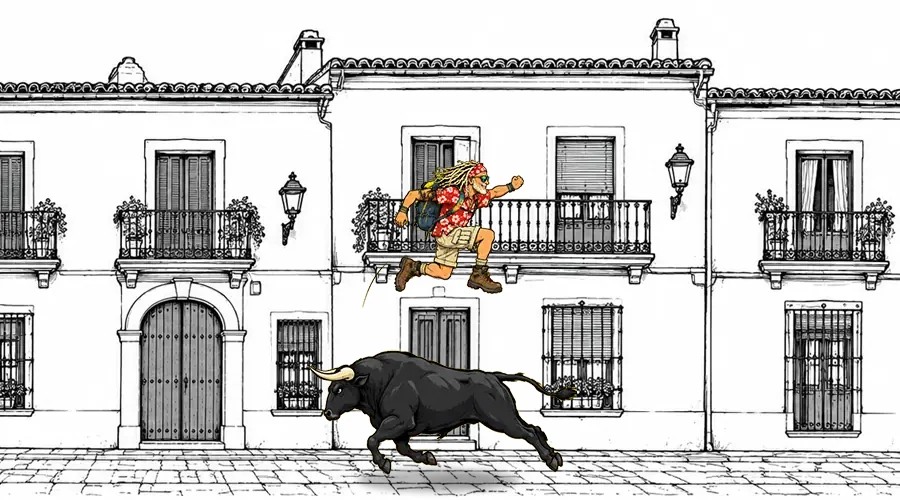
The Backpackers Bible guru, a dreadlocked backpacker in a Hawaiian shirt, leaping over a charging black bull on a cobbled street in Spain

Things To Do In Madrid

Search Madrid Attractions and Tours

Interactive tourist attraction and tour map for Madrid showing things to do for backpackers.
Tours in Madridon GetYourGuide ↗
Discover the best things to do, attractions, and backpacker tours in Madrid. Use two fingers to move the map, pinch to zoom.

1. The Museum Triangle & The Royal Palace (Non-Negotiable)

Madrid's museum concentration is genuinely one of the best in the world, and you don't need to be an art person to be floored by it.

The Prado (book ahead)

One of the finest classical art collections on Earth — Velázquez's Las Meninas, Goya's "Black Paintings," Bosch's Garden of Earthly Delights. Free entry the last two hours before closing most days if you're on a tight budget. Entry from roughly €15.

Reina Sofía

Home to Picasso's Guernica, displayed alone in its own room and considerably more overwhelming in person than in any photograph. Free entry most evenings. Entry from roughly €12.

Read More

The Royal Palace

Europe's largest royal palace by floor area, still the official residence of the Spanish royal family (though they don't actually live there day-to-day). Opulent state rooms, a genuinely excellent armoury, and a free-to-view changing of the guard ceremony on select days. Entry from roughly €14.

2. Adrenaline

Hiking and climbing the Sierra de Guadarrama: A genuine mountain range less than an hour from the city centre, with proper hiking, rock climbing, and — in winter — skiing at Puerto de Navacerrada.

Hot air ballooning over Toledo or Segovia: Several operators run early-morning balloon flights over the plains and castles outside Madrid, a genuinely spectacular way to see the countryside.

The Teleférico cable car: A cable car ride from Parque del Oeste out over the Manzanares river to Casa de Campo, the city's enormous park — not extreme, but a fun, cheap way to see Madrid from above.

3. Retiro Park & The City's Green Spaces

Retiro Park is Madrid's answer to a city beach — a genuinely enormous green space where half the city seems to spend its Sunday afternoons. Rent a rowing boat on the lake, wander to the Crystal Palace (a 19th-century glass pavilion that hosts free art exhibitions), or just find a patch of grass and watch the buskers and street performers who gather near the main gates.

Beyond Retiro, Casa de Campo is five times the size and considerably wilder — genuine hiking and mountain-biking trails within the city limits — while Madrid Río, the redeveloped riverside park along the Manzanares, is a good flat cycling or running route.

4. Free Madrid (Zero Euros)

The Templo de Debod at sunset: A genuine 2,200-year-old Egyptian temple, gifted to Spain in the 1960s and rebuilt stone-by-stone in a city park — one of the best free sunset spots in Madrid, and most visitors have no idea it's even here.

Free museum evenings: The Prado, Reina Sofía, and several other major museums offer free entry during specific evening hours most days of the week — check current times before you go, but this is one of the best-value tips in the whole city.

Plaza Mayor and El Rastro: Wandering the grand 17th-century Plaza Mayor costs nothing, and Sunday mornings bring El Rastro, one of Europe's oldest and largest flea markets, sprawling through the streets of La Latina.

Retiro Park: The whole park is free to enter and easily worth an entire afternoon.

5. Nightlife: How It Actually Works

Madrid's nightlife reputation is not exaggerated — this is arguably the latest-running party city in Europe, a direct legacy of the post-Franco movida madrileña counter-culture explosion. Dinner from 9–10pm, bars from 11pm, clubs properly filling from 2am onwards.

For a first drink

Malasaña and La Latina both have a proper bar-hopping scene — order a caña, get a free tapa, move on to the next place. Chueca is the pick for a livelier, more LGBTQ+-friendly start to the night.

For clubbing

Kapital, a seven-floor superclub with a different genre on every level, is the famous one — genuinely worth doing once. Teatro Barceló and Fabrik (out toward the edge of the city) are other big-name options.

For the actual end of the night

The real Madrid ritual isn't the club, it's what comes after: churros con chocolate at Chocolatería San Ginés, open since 1894 and serving until well past dawn, packed with people who clearly haven't been to bed yet.

6. The Big Hits (Things You Must Not Skip)

Plaza Mayor & Puerta del Sol

The historic heart of the city — Plaza Mayor's grand 17th-century arcades, and Puerta del Sol's Kilometre Zero marker, the point from which every road in Spain is officially measured.

Gran Vía

Madrid's answer to Broadway — a grand early-20th-century boulevard of theatres, cinemas, and elaborate façades, at its best lit up after dark.

Mercado San Miguel

A beautiful early-1900s glass-and-iron market building right by Plaza Mayor, now a high-end tapas and small-plates market — pricier than a normal bar, but a genuinely good way to sample a huge range of Spanish food in one sitting.

Day trip: Toledo

A UNESCO-listed medieval walled city just 30 minutes away by high-speed train — genuinely one of the easiest and most rewarding day trips from any major European capital. Full details in our Toledo guide.

7. Live Sport

Real Madrid at the Santiago Bernabéu: One of the biggest club football experiences on the planet, recently rebuilt into a genuinely futuristic stadium. Tickets for standard league fixtures from roughly €60–€100, considerably more for El Clásico or Champions League nights. The stadium tour, when there's no match, is worth doing in its own right.

Atlético Madrid at the Metropolitano: The city's "other" club, with a fiercely working-class fanbase and a considerably rowdier, cheaper matchday atmosphere than the Bernabéu — arguably the more authentic football experience of the two.

Bullfighting at Las Ventas: Spain's largest bullring and a genuine architectural landmark, whether or not you choose to attend an actual bullfight — a deeply divisive tradition even within Spain itself, with strong views on both sides, and entirely your call whether it's something you want to see.

Cartoon of a backpacking guru in a Spanish painting

Top-Rated Madrid Tours on GetYourGuide.com

GRAN VIA, MADRID | By Felipe Gabaldón - originally posted to Flickr as Gran Vía (Madrid), CC BY 2.0, Link

Budget Accommodation In Madrid

Hostels listed on Booking.com and Hostelworld

For our picks of the top hostels in Madrid, see

For a full list of hostels, see our

Where Do You Want To Go Next?