

Welcome to my backpacking guide to the Spanish coast!
Discover moreBackpacking Coastal Spain
Costa Brava. Costa del Sol. Costa Blanca. You've probably seen these names on a departures board or a holiday ad long before you thought about backpacking Spain. Between them, the "costas" cover almost every beach in the country. They also cause a lot of confusion, because nobody agrees exactly where each one starts and ends.
That's because most of these names are tourism brands, not official regions. They don't follow Spain's regional borders, so one region can hold several costas, and one costa can cross a border. This page lists 17 stretches of mainland coast in order, going clockwise from the French border in the north-east. Each one says where it begins and ends, and which region of our guide covers it.
For backpackers, the coast you pick shapes your whole trip. Some are packed with hostels, cheap bars and late nights. Others are quiet, wild and almost empty. Budget travel is easy on some and harder on others, so we say which are which. The Balearic and Canary Islands have their own pages, as do Ceuta and Melilla.
Which Coast Is For You?
For parties:
Costa del Sol (Torremolinos), Costa Blanca (Benidorm), Costa Dorada (Salou), Costa Brava (Lloret de Mar) and Costa de Barcelona (Sitges).
For wild and quiet:
Costa de Almería (Cabo de Gata), Costa da Morte, Costa Tropical and Costa del Azahar.
For surf and wind:
Costa de la Luz (Tarifa), Costa Vasca, Costa de Cantabria (Somo) and Rías Altas.
For cities by the sea:
Costa de Valencia (Valencia), Costa de Barcelona (Barcelona), Costa Vasca (San Sebastián) and Costa del Sol (Málaga).
For the cheapest trip:
Costa Cálida, Costa de Almería, Costa del Azahar and Costa de Valencia, where more of the crowd is Spanish.
The Coasts, Step by Step
We start at the French border and go clockwise. Boundaries are loose, so we use the ones most guidebooks and tourist boards agree on. Where they disagree, we say so.
The North-East: Catalonia's Coasts
Three coasts, all in Catalonia, running south from the French border.
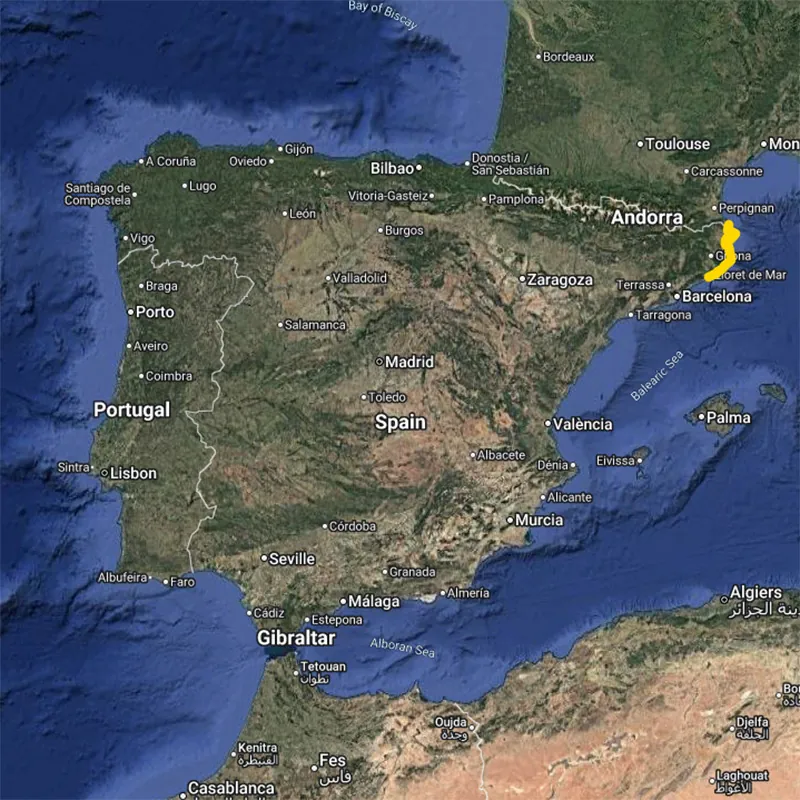
Costa Brava
Runs from: Blanes to the French border at Portbou.
The Costa Brava is in Catalonia. The name means "wild coast", and it fits. Pine-covered cliffs drop into small coves, called calas, with clear green water. Tossa de Mar has a walled old town above the beach. Cadaqués is a whitewashed village that inspired Salvador Dalí. Lloret de Mar is the party town, loud and cheap. The coastal path, the Camí de Ronda, links the coves and costs nothing. July and August are busy and pricey, so try June or September. Fly into Girona or Barcelona.
Budget Accommodation On The Costa Brava
Hostels listed on Booking.com and Hostelworld
For a full list of hostels, see our
Affordable Things To Do On The Costa Brava
- Boat trips: Short cruises run along the cliffs from Lloret de Mar and Tossa de Mar, and boats from L'Estartit go out to the Medes Islands marine reserve, where the snorkelling is excellent.
- Sant Pere de Rodes: A huge ruined Benedictine monastery high above Port de la Selva, with big views over the coast. The entry fee is small.
- Dalí Theatre-Museum: Figueres is a short trip inland, and Dalí's surreal museum is one of the most visited in Spain. Book ahead in summer.
- Kayaks and paddleboards: Hire a kayak or stand-up paddleboard to reach coves you can't walk to, around Begur, Tossa and Cadaqués.
Free Activities On The Costa Brava
- The Camí de Ronda: The old coastal path links the coves for free. Good stretches include Calella de Palafrugell to Llafranc and Tamariu, and Sant Feliu de Guíxols to S'Agaró.
- Cove-hopping near Begur: Walk down to Sa Tuna, Aiguablava and the little calas around them for clear water and no entry fee.
- Tossa de Mar's Vila Vella: Wander the walled old town above the beach and the lanes inside it.
- Cap de Creus: Wild, windswept headland in the far north, with lighthouse viewpoints and rocky coves, reached on foot from Cadaqués.
- Castell de Montgrí: A free hike from Torroella de Montgrí up to a ruined castle, with views over the Ter plain and the Medes Islands.
Daytrips And Tours On The Costa Brava
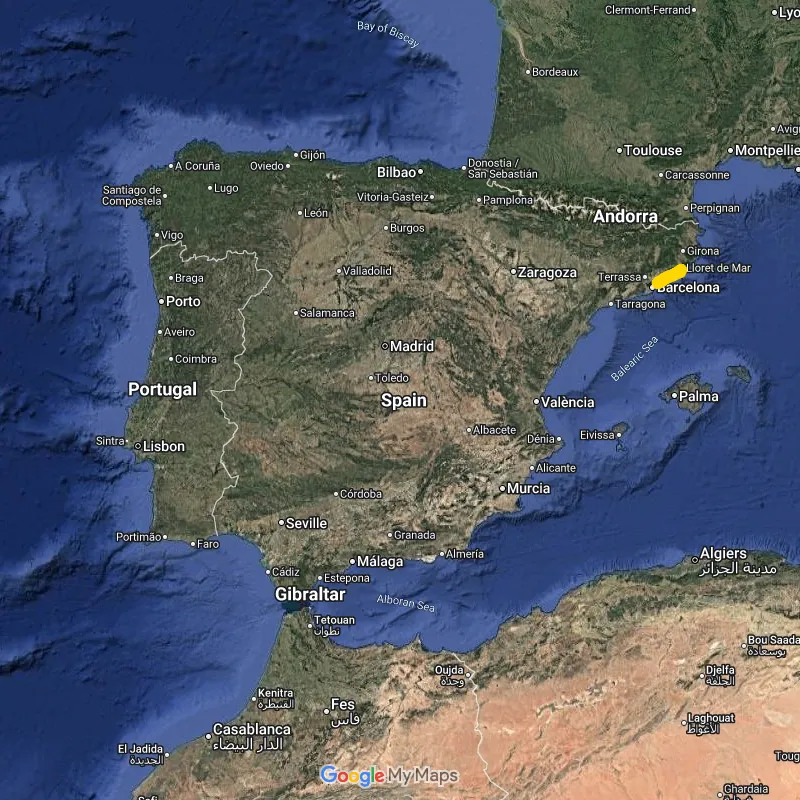
Costa del Maresme
Runs from: Montgat, just north of Barcelona, to the Tordera river near Malgrat de Mar.
The Costa del Maresme is in Catalonia, immediately north of Barcelona. It's a long stretch of Mediterranean coastline backed by pine-covered hills, with broad sandy beaches and a string of towns connected by the R1 commuter railway. Calella is the main resort town, with plenty of hotels, bars and nightlife. Pineda de Mar, Santa Susanna and Malgrat de Mar are popular beach destinations, particularly with package-holiday visitors. Further south, Sant Pol de Mar and Arenys de Mar have a more traditional fishing-village feel, while Mataró is the regional capital, with Roman remains and some beautiful Modernista architecture. The train makes it easy to explore the coast or head into Barcelona, so you don't need a car. Summer gets busy, but outside July and August this is a convenient base for exploring the Catalan coast without paying Barcelona prices.
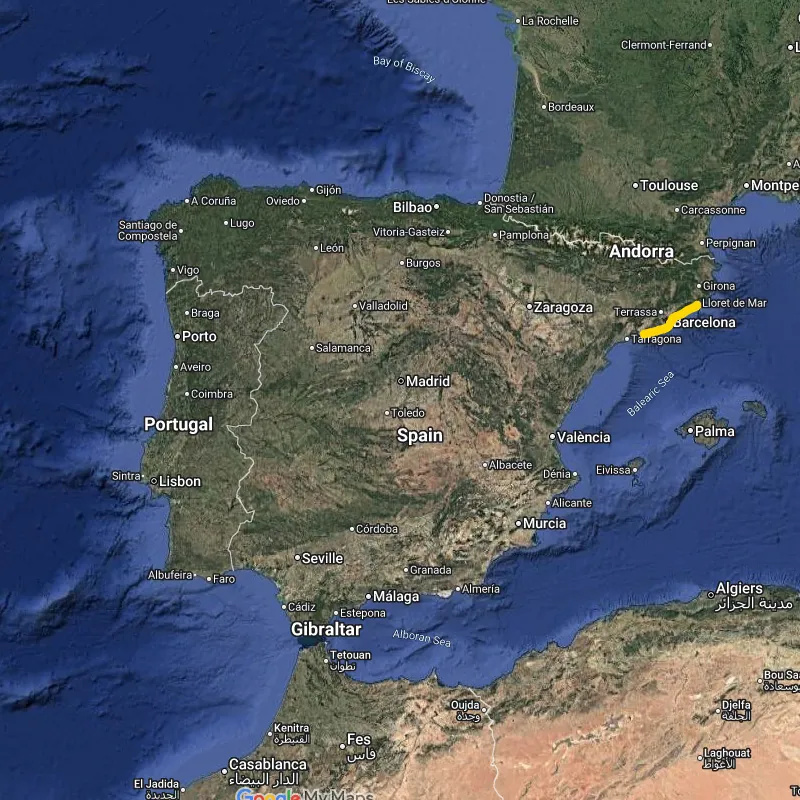
Costa de Barcelona
Runs from: Cunit, a little south-west of Sitges, to the Tordera river near Blanes.
The Costa de Barcelona is in Catalonia. This is Barcelona's own coast, made up of two stretches. The Garraf is to the south, with Castelldefels and Sitges. The Maresme is to the north, with long, straight beaches and a train line running right beside the sand. Sitges is a fun, friendly beach town with a big LGBTQ+ scene, and it's about 40 minutes from Barcelona by train. Barcelona's city beaches are free and easy to reach by metro. Calella and Pineda de Mar are cheap resort towns for a beach day without the city prices.
Budget Accommodation On The Costa de Barcelona
Hostels listed on Booking.com and Hostelworld
For a full list of hostels, see our
Affordable Things To Do On The Costa de Barcelona
- Park Güell: The ticketed monumental zone is much cheaper than Barcelona's other big Gaudí sights. Book a time slot ahead.
- Montserrat: A day trip by train and rack railway to the jagged mountain monastery, with walking trails above it.
- Sitges' Cau Ferrat: The old seafront house-museum of the artist Santiago Rusiñol, with a good collection and sea views.
- Picasso Museum: Good value, and the queues are shorter if you book online.
Free Activities On The Costa de Barcelona
- Barcelona's city beaches: Barceloneta, Bogatell and the beaches beyond are free and a short metro or tram ride away.
- Bunkers del Carmel: The best free sunset view over Barcelona. Take water, and go early because it fills up.
- Barri Gòtic and the Ciutadella park: Wander the old lanes, then cool off under the trees in Parc de la Ciutadella.
- Garraf Natural Park: Free walking trails in the hills above Sitges, with views down to the sea.
- First-Sunday museum days: Many of Barcelona's museums are free on the first Sunday of the month. Check each museum's website first.
Daytrips And Tours On The Costa de Barcelona
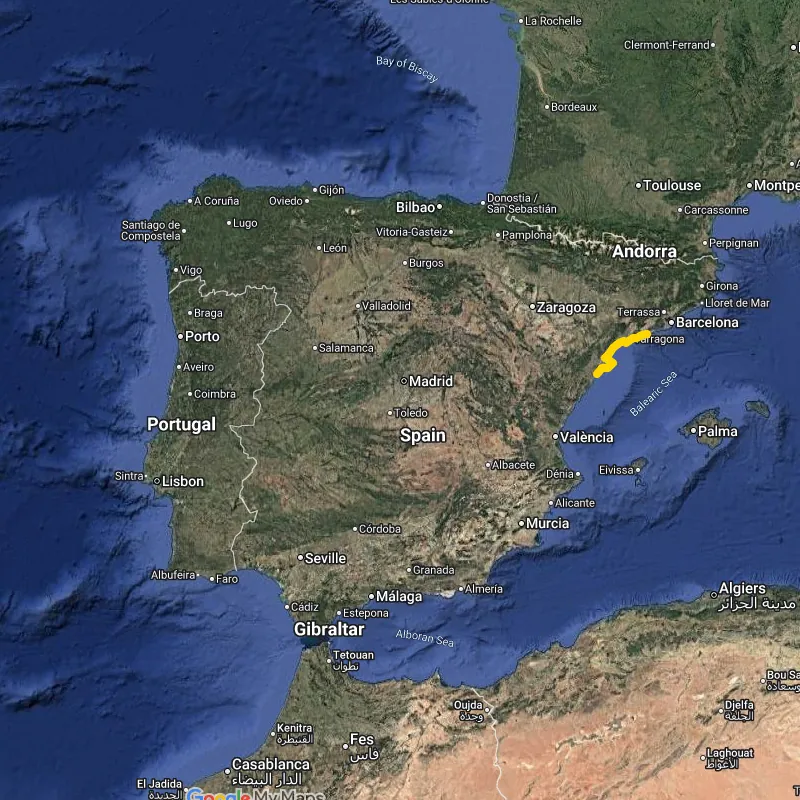
Costa Dorada (Costa Daurada)
Runs from: Alcanar, near the Valencia border, to Cunit.
The Costa Dorada is in Catalonia. The "golden coast" is famous for its long, golden, sandy beaches. The water is shallow and warm, so it suits families and beginners. Salou is the party town, and it sits next to the huge PortAventura World theme park. Tarragona has Roman ruins, including an amphitheatre right by the sea. Cambrils is great for fresh seafood. In the south, the Ebro Delta is a wild landscape of rice fields and birds, and it's a good place to cycle.
Budget Accommodation On The Costa Dorada
Hostels listed on Booking.com and Hostelworld
For a full list of hostels, see our
Affordable Things To Do On The Costa Dorada
- Tarragona's Roman sites: The amphitheatre by the sea, the circus and the forum are all cheap to enter. A combined ticket can save money.
- Poblet Monastery: A huge, well-preserved Cistercian monastery inland, with a UNESCO listing and a small entry fee.
- Penedès and Priorat wineries: Cellar visits and tastings are often cheap, particularly in the Penedès.
- Ebro Delta by bike: Hire a bike for the flat rice fields and lagoons, with flamingos and many other birds.
- Salou boat trips: Short coastal cruises between Salou and Cambrils.
Free Activities On The Costa Dorada
- Cap de Salou coastal path: A pine-shaded walk around the cape past little coves like Cala Font and Cala Penya Tallada.
- Tarragona's old town and Balcó del Mediterrani: The old streets, the city walls and the sea-view balcony are all free.
- Punta del Fangar: A wild beach at the end of the Ebro Delta, with dunes, birds and almost no buildings.
- Altafulla: A pretty walled old village with a long beach below it.
- Cambrils waterfront: Stroll the harbour and watch the fishing boats unload.
Daytrips And Tours On The Costa Dorada
The East: Valencia & Murcia's Coasts
Four coasts down Spain's sunny east side, in Valencia and Murcia.
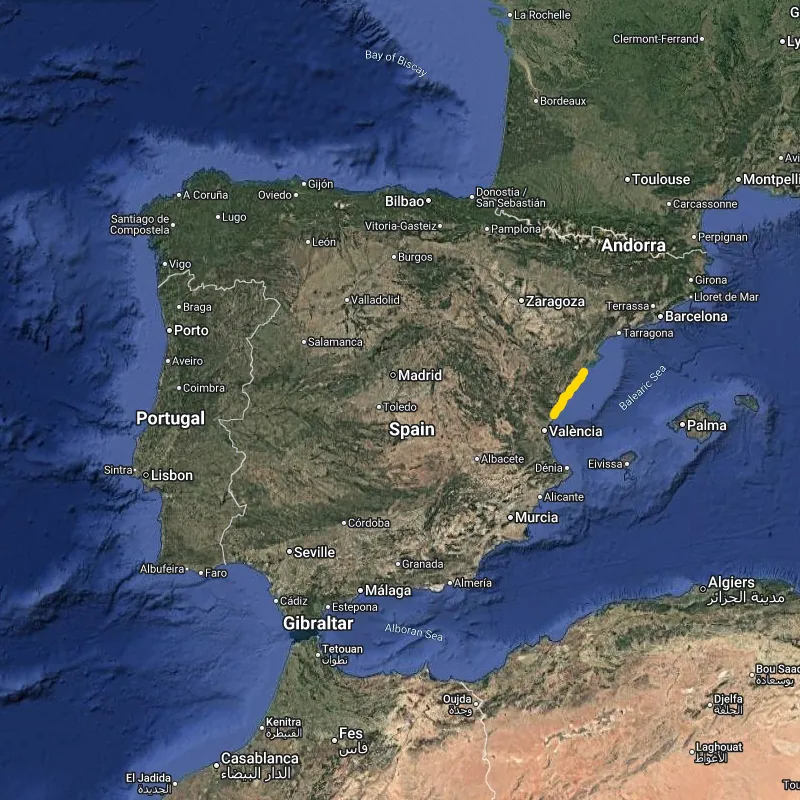
Costa del Azahar
Runs from: Vinaròs, at the Catalan border, to Almenara, where Castellón meets Valencia province.
The Costa del Azahar is in Valencia. The "orange blossom coast" is quieter than its neighbours and mostly full of Spanish holidaymakers, so prices stay low. Peñíscola has a castle on a rocky headland, and it starred in Game of Thrones. Benicàssim hosts the Rototom Sunsplash reggae festival, and nearby Burriana has the Arenal Sound festival. Boat trips run out to the Columbretes Islands, a marine reserve with great snorkelling. Line-ups and dates change every year, so check before you book.
Budget Accommodation On The Costa del Azahar
Hostels listed on Booking.com and Hostelworld
For a full list of hostels, see our
Affordable Things To Do On The Costa del Azahar
- Peñíscola Castle: The Templar castle on the headland has a small entry fee and good views.
- Columbretes Islands: Boat trips run out to the marine reserve, and the snorkelling is good. Book ahead and check the sailing days.
- Sagunt: A Roman theatre and a long hilltop castle, just south of where this coast ends.
- Festival tickets: Rototom Sunsplash and Arenal Sound are in summer. Line-ups, dates and prices change every year, so check early.
Free Activities On The Costa del Azahar
- Serra d'Irta: A protected coastal range between Peñíscola and Alcossebre with wild trails and empty coves.
- Peñíscola's old town: Wander the whitewashed lanes and the seafront under the castle.
- Desert de les Palmes: Free hiking trails in the hills behind Benicàssim.
- Benicàssim's beaches: A long, clean urban beach that's cheap to reach and has a good seafront promenade.
Daytrips And Tours On The Costa del Azahar
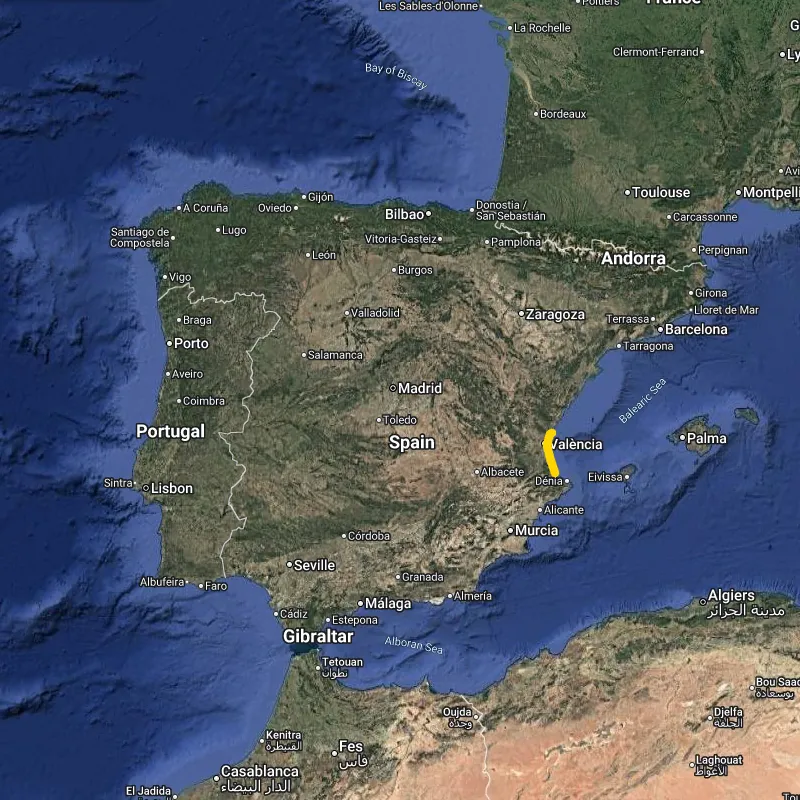
Costa de Valencia
Runs from: Canet d'en Berenguer, north of Valencia city, to Oliva, near the Alicante border.
The Costa de Valencia is in Valencia. Valencia is the star here, a big, sunny city with a free beach at the end of the tram line. It's the home of paella, and you can try the real thing in the rice fields of the nearby Albufera lagoon. Fallas, in March, is a week of fireworks and giant sculptures that are burned on the last night. South of the city, Cullera and Gandia have long beaches and a busy summer party scene. This is one of the easiest places in Spain for budget travel.
Budget Accommodation On The Costa de Valencia
Hostels listed on Booking.com and Hostelworld
For a full list of hostels, see our
Affordable Things To Do On The Costa de Valencia
- Albufera boat trip: A short, cheap boat ride on the lagoon at sunset. Many people pair it with a paella lunch in El Palmar.
- Torres de Serranos and Torres de Quart: Climb the old city gates for cheap views. Entry has often been free on Sundays and holidays, so check.
- Menú del día: Weekday set lunches are the cheapest way to eat well in Valencia.
- Bike hire: The city is flat and has plenty of cycle lanes, including along the old riverbed.
Free Activities On The Costa de Valencia
- Turia Gardens: A long, green park in the old river bed that runs right through the city.
- Malvarrosa and Las Arenas beaches: Valencia's city beaches are free and an easy tram ride from the centre.
- City of Arts and Sciences: The buildings are free to walk around, even if you don't go inside.
- Mercado Central and Plaza de la Virgen: One of Europe's biggest food markets, plus the cathedral square nearby.
- Cullera and Gandia beaches: Long, free beaches south of the city, with a busy summer scene.
Daytrips And Tours On The Costa de Valencia

Costa Blanca
Runs from: Pilar de la Horadada, at the Murcia border, to Dénia.
The Costa Blanca is in Valencia, in Alicante province. The "white coast" is one of Spain's best-known holiday stretches. Benidorm is a forest of skyscrapers with huge clubs and cheap drinks, and it's a wild stag and hen party town. Alicante is a lively city with a hilltop castle, a good beach and a big student crowd. Further north, Calpe has a giant rock rising from the sea, and Xàbia and Altea are prettier. From Dénia, you can take a ferry to Ibiza and Formentera. Alicante airport is one of the busiest in Spain.
Budget Accommodation On The Costa Blanca
Hostels listed on Booking.com and Hostelworld
For a full list of hostels, see our
Affordable Things To Do On The Costa Blanca
- Isla de Tabarca: A small walled island reached by boat from Alicante, with clear water for snorkelling.
- Guadalest: A hilltop village and reservoir inland from Benidorm, easy to reach by bus.
- Dénia Castle: A hilltop fortress with a small entry fee and views over the port.
- Kayaking at Calpe: Hire a kayak or paddleboard to see the Peñón de Ifach from the water.
Free Activities On The Costa Blanca
- Santa Bárbara Castle: The hilltop castle above Alicante has free entry, and you can walk up for views over the bay. The lift costs a little.
- Penyal d'Ifac: A natural park around the huge rock at Calpe, with a free walking trail.
- Serra Gelada: A coastal trail between Benidorm and Albir with cliffs, a lighthouse and views.
- Alicante's Explanada: A mosaic-paved promenade by the port, with the city beach beside it.
- Altea's old town: Steep, whitewashed streets and a blue-domed church above the sea.
Daytrips And Tours On The Costa Blanca
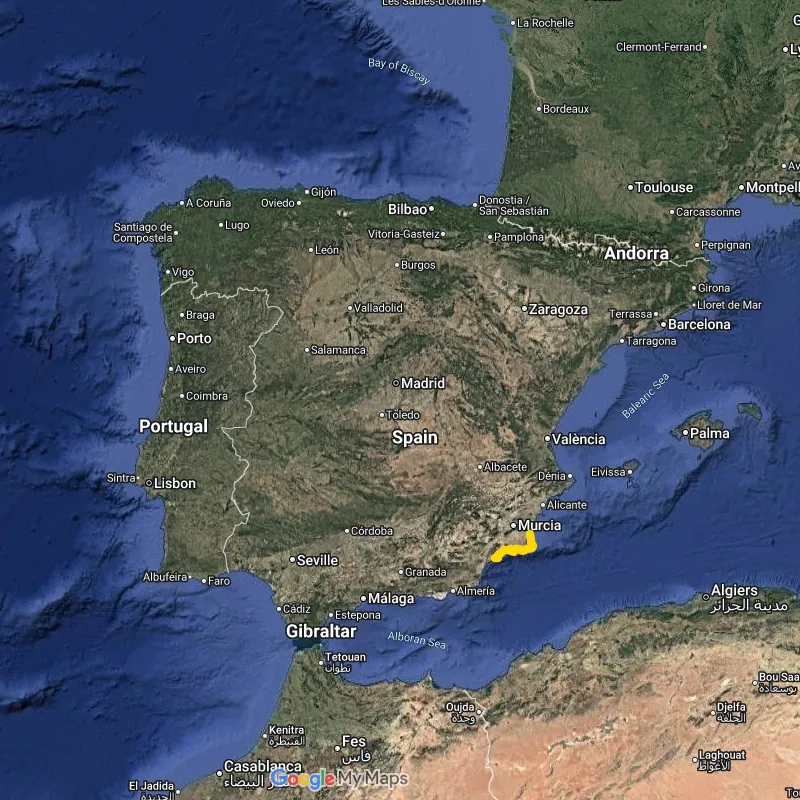
Costa Cálida
Runs from: Pilar de la Horadada, at the Alicante border, to Águilas, at the Almería border.
The Costa Cálida is in Murcia. The "warm coast" has the Mar Menor, Europe's biggest saltwater lagoon, with shallow, warm, calm water. A thin strip of land called La Manga separates it from the open sea. Cabo de Palos is a top spot for diving, and Calblanque has wild beaches with no hotels. Cartagena has a Roman theatre and lots of cheap tapas. It gets few foreign backpackers, and prices are low. Read our Murcia guide for the full story.
Budget Accommodation On The Costa Cálida
Hostels listed on Booking.com and Hostelworld
For a full list of hostels, see our
Affordable Things To Do On The Costa Cálida
- Cartagena's Roman Theatre: A cheap entry, with a museum that leads you through to the ruins.
- Cartagena's harbour and shelters: Cheap boat trips round the harbour and the Civil War air-raid shelters are good for a rainy day.
- Mar Menor watersports: Paddleboards and kayaks suit the warm, shallow water.
- Cabo de Palos snorkelling: Try snorkelling or a first dive near the Hormigas Islands marine reserve.
Free Activities On The Costa Cálida
- Calblanque: A regional park of wild beaches and dunes, with no hotels.
- Salinas de San Pedro del Pinatar: Salt pans, flamingos and mud flats on the northern edge of the Mar Menor.
- Cartagena's waterfront and old town: Walk past the harbour and the Roman remains, then find the cheap tapas bars.
- La Manga beaches: Calm Mar Menor on one side, open sea on the other, and all free to use.
- Cabo de Palos lighthouse: A short walk to the point, with views of the islands offshore.
Daytrips And Tours On The Costa Cálida
The South: Andalusia's Coasts
Four coasts, all in Andalusia, from the Murcia border round to the Atlantic.
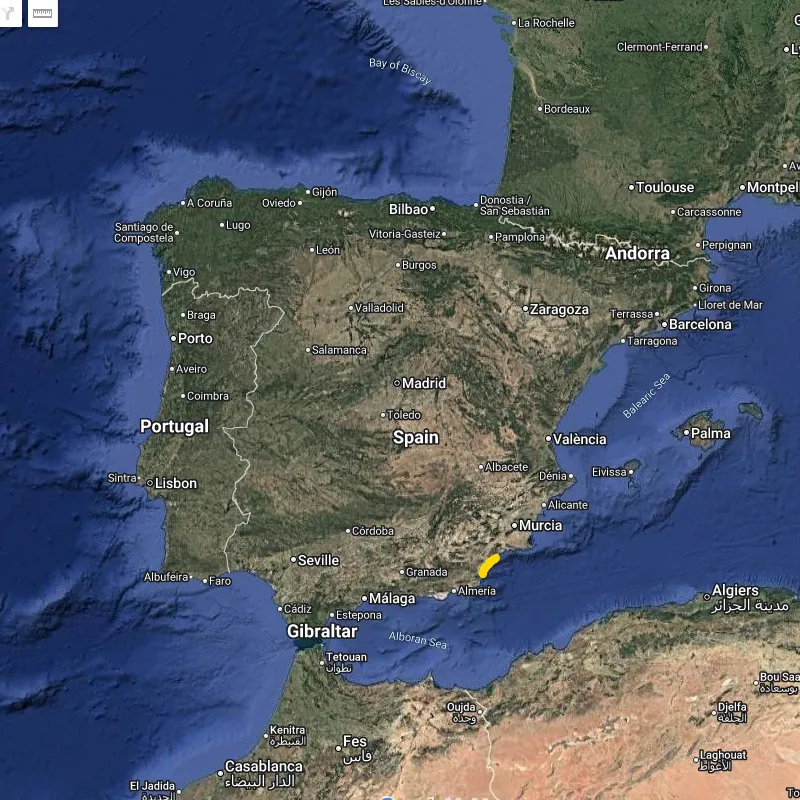
Costa de Almería
Runs from: The Murcia border, near Pulpí, to Adra.
The Costa de Almería is in Andalusia. Spain's driest, sunniest and emptiest coast. Cabo de Gata-Níjar Natural Park has desert hills, volcanic rock and wild beaches like Los Genoveses and Mónsul. Mojácar is a white hill village with a beach below. Almería city has a huge fortress and the tradition of a free tapa with every drink. Inland, the Tabernas desert was the set for hundreds of western films. Near El Ejido, the huge area of plastic greenhouses can be seen from space. It's cheap and quiet, and it's better with a car or scooter.
Budget Accommodation On The Costa de Almería
Hostels listed on Booking.com and Hostelworld
For a full list of hostels, see our
Affordable Things To Do On The Costa de Almería
- Almería's Alcazaba: A huge Moorish fortress above the city. Entry rules and fees vary by nationality, so check before you go.
- Civil War shelters: A guided tour of the underground air-raid shelters in Almería city.
- Kayaking and snorkelling at Cabo de Gata: Guided trips from San José and Los Escullos reach coves that are hard to get to on foot.
- Tabernas desert: The old western film sets are paid attractions, but the badlands are free to look at from the road.
Free Activities On The Costa de Almería
- Los Genoveses and Mónsul: Two of the best wild beaches in Spain, with dunes, volcanic rock and no buildings.
- Cabo de Gata walking trails: Coastal paths between the villages, with cliffs and desert scrub. Take water.
- Mojácar Pueblo: A white hill village with big views, and a beach below.
- Las Salinas de Cabo de Gata: Salt pans with flamingos and a birdwatching hide.
- Free tapas in Almería: Many bars still give you a free tapa with each drink.
Daytrips And Tours On The Costa de Almería
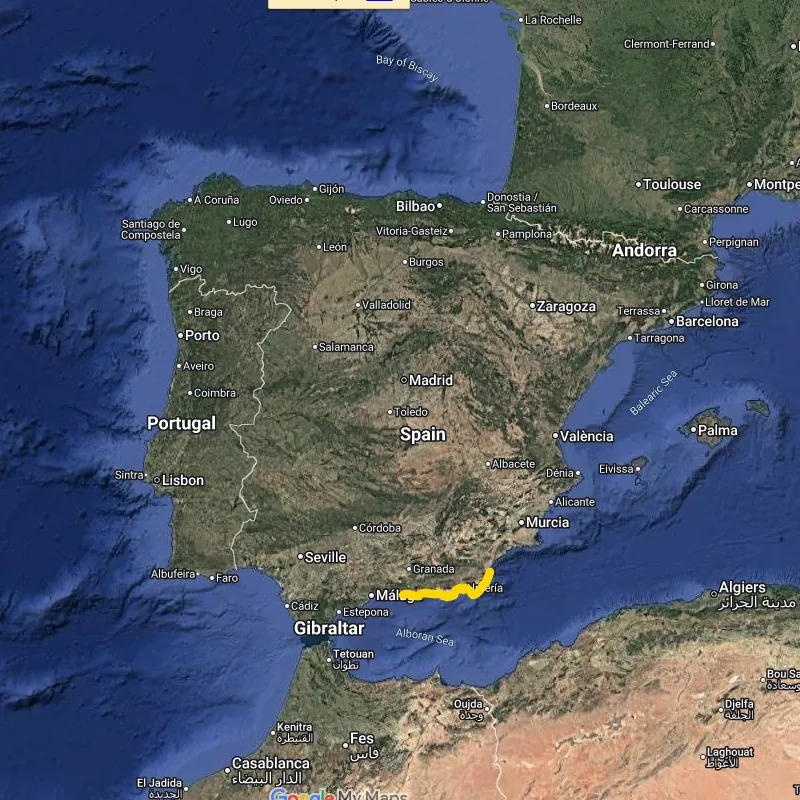
Costa Tropical (a.k.a. Costa Granadina)
Runs from: The Almería border, near La Rábita, to Cerro Gordo, near La Herradura, where Málaga begins.
The Costa Tropical is in Andalusia, in Granada province. A short, steep, quiet coast with a mild climate where sugar cane, avocados and custard apples grow. Salobreña is a white village under a castle. Almuñécar has Roman remains and a seafront fortress. La Herradura has a lovely bay and good diving, and nearby Cantarriján is a pretty cove where nudity is common. Granada is about an hour inland, and in winter you can ski in the Sierra Nevada and still reach the beach. Much quieter and cheaper than the Costa del Sol.
Budget Accommodation On The Costa Tropical
Hostels listed on Booking.com and Hostelworld
For a full list of hostels, see our
Affordable Things To Do On The Costa Tropical
- Alhambra day trip: Granada is about an hour inland. Book Alhambra tickets weeks ahead, since the cheapest slots go first.
- Almuñécar's San Miguel Castle: A small entry fee, with views over the bay and the town.
- Salobreña Castle: A cheap Moorish castle above a white village.
- Snorkelling at La Herradura: Clear water and good diving. Dive schools also run cheap snorkelling trips.
Free Activities On The Costa Tropical
- Cerro Gordo coastal path: Cliffs, small coves and sea views near La Herradura.
- Salobreña's old town: A steep climb through white lanes to the castle, with views to the sea.
- Almuñécar's seafront and Roman remains: Walk the promenade and look at the aqueduct and old ruins.
- Cantarriján: A pretty cove near La Herradura, where nudity is common.
Daytrips And Tours On The Costa Tropical
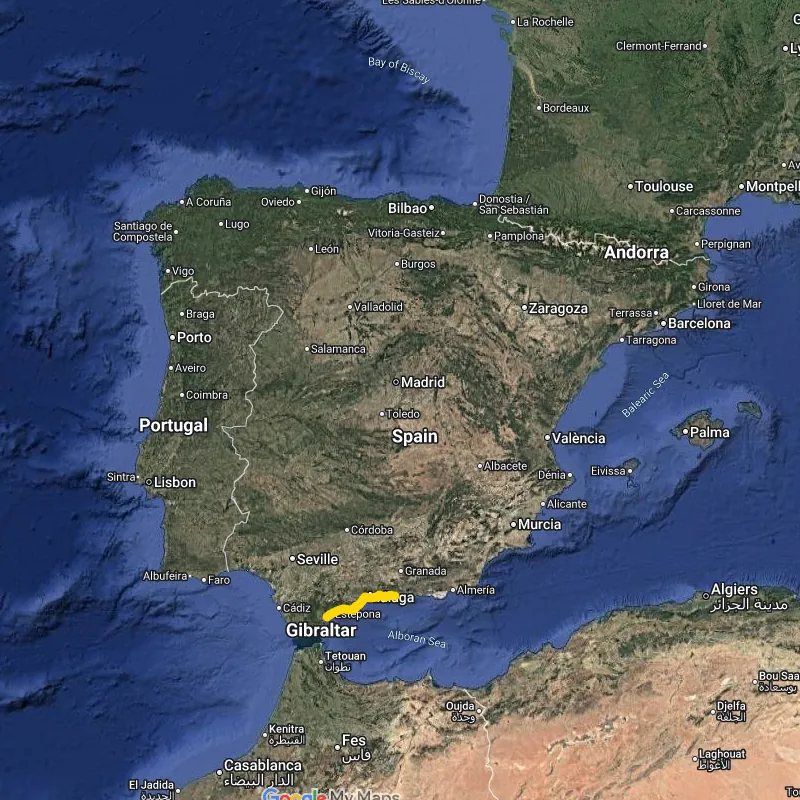
Costa del Sol
Runs from: Manilva, at the Cádiz border, to Nerja, at the Granada border.
The Costa del Sol is in Andalusia, in Málaga province. Spain's most famous coast, with the cheap flights to match. Málaga is a proper city, with a castle, art, great nightlife and grilled sardines on skewers, called espetos, cooked on the beach. Torremolinos is a cheap party base with a big LGBTQ+ scene. Fuengirola and Benalmádena are busy resorts. Marbella and Puerto Banús are glamorous and pricey, though the beaches are free. Nerja has caves and a cliff-top viewpoint. In summer it's hot, packed and expensive, so try May, June or September.
Budget Accommodation On The Costa del Sol
Hostels listed on Booking.com and Hostelworld
For a full list of hostels, see our
Affordable Things To Do On The Costa del Sol
- Alcazaba and Gibralfaro: Málaga's twin hilltop fortresses have cheap entry, and there's often a free window on Sunday afternoons.
- Caminito del Rey: A famous cliffside walkway in a gorge inland. It sells out, so book well ahead.
- Nerja Caves: Huge caverns with a small entry fee, a short bus ride from Nerja town.
- Picasso Museum Málaga: A good collection in the artist's home city, with reduced prices at certain times.
- Ronda day trip: A dramatic cliff-top town about two hours inland.
Free Activities On The Costa del Sol
- Málaga's beaches: La Malagueta and the beaches beyond are free, with espetos grilled on the sand.
- Torremolinos and La Carihuela: A long seafront promenade with fishing-village bars and a free beach.
- Nerja's Balcón de Europa: A clifftop promenade with views over the coves.
- Marbella old town: The old centre is free to wander, and so are the beaches, even at Puerto Banús.
- Mijas Pueblo: A white hill village above the coast with good views.
Daytrips And Tours On The Costa del Sol
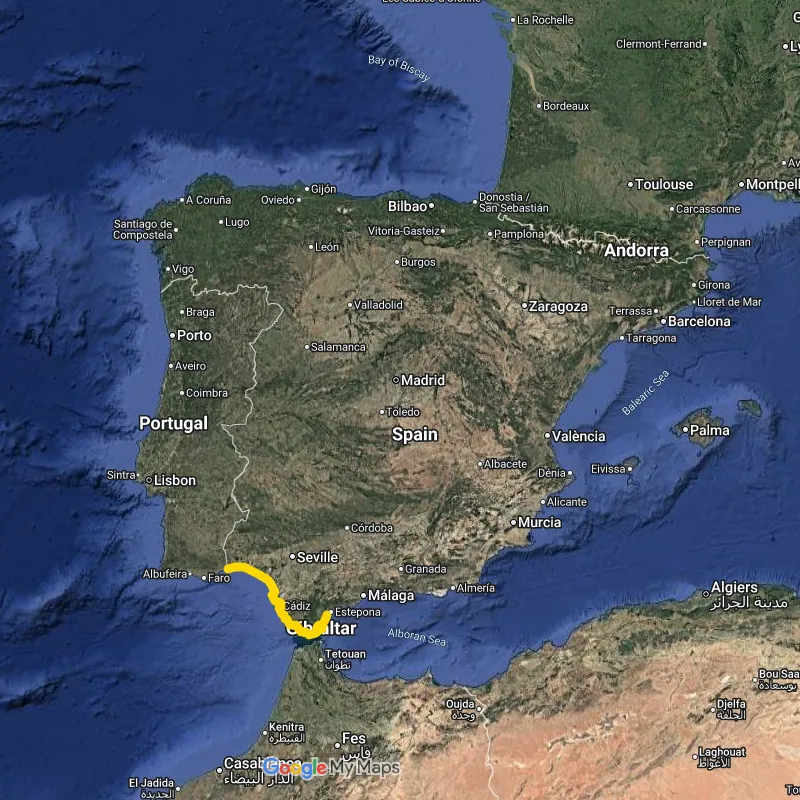
Costa de la Luz
Runs from: Ayamonte, at the Portuguese border, to Tarifa.
The Costa de la Luz is in Andalusia, in Huelva and Cádiz provinces. The "coast of light" faces the Atlantic, so there are big waves, wide beaches and a lot of wind. Tarifa is Spain's kitesurfing capital, and from there you can take a ferry to Morocco. Cádiz is one of the oldest cities in Europe, with a carnival in February that Spaniards adore. Bolonia has a giant dune and Roman ruins by the sea. Doñana National Park is a huge wetland for wildlife. The sea is colder than the Mediterranean, but prices are lower, and the crowds are mostly Spanish. A short stretch round the Bay of Algeciras, which includes Gibraltar, sits between this coast and the Costa del Sol.
Budget Accommodation On The Costa de la Luz
Hostels listed on Booking.com and Hostelworld
For a full list of hostels, see our
Affordable Things To Do On The Costa de la Luz
- Whale and dolphin watching from Tarifa: Boat trips in the Strait of Gibraltar are affordable and often include a good chance of seeing dolphins.
- Surf or kite lesson: Lessons at Tarifa, Conil or El Palmar are the biggest spend here but worth it.
- Baelo Claudia: Roman ruins by the sea at Bolonia. Entry is cheap, or free for some nationalities.
- Torre Tavira, Cádiz: A cheap camera obscura inside a watchtower, with views over the rooftops.
- Doñana 4x4 trips: Guided jeep trips into the wetlands from El Rocío are an easy way to see wildlife.
Free Activities On The Costa de la Luz
- Bolonia dune and beach: A giant sand dune and a long, wild beach with almost nothing built on it.
- La Caleta, Cádiz: A small city beach between two castles, with a popular sunset.
- Cádiz's old town: Walk the narrow streets, plazas and sea walls for free.
- Tarifa's beaches: Playa de Los Lances is long and open, with kitesurfers all year.
- Conil and El Palmar: Wide beaches, white villages and cheap seafood nearby.
Daytrips And Tours On The Costa de la Luz
The North-West & North: The Green Coasts
Six wetter, wilder coasts across Galicia, Asturias, Cantabria and the Basque Country.
Rías Baixas
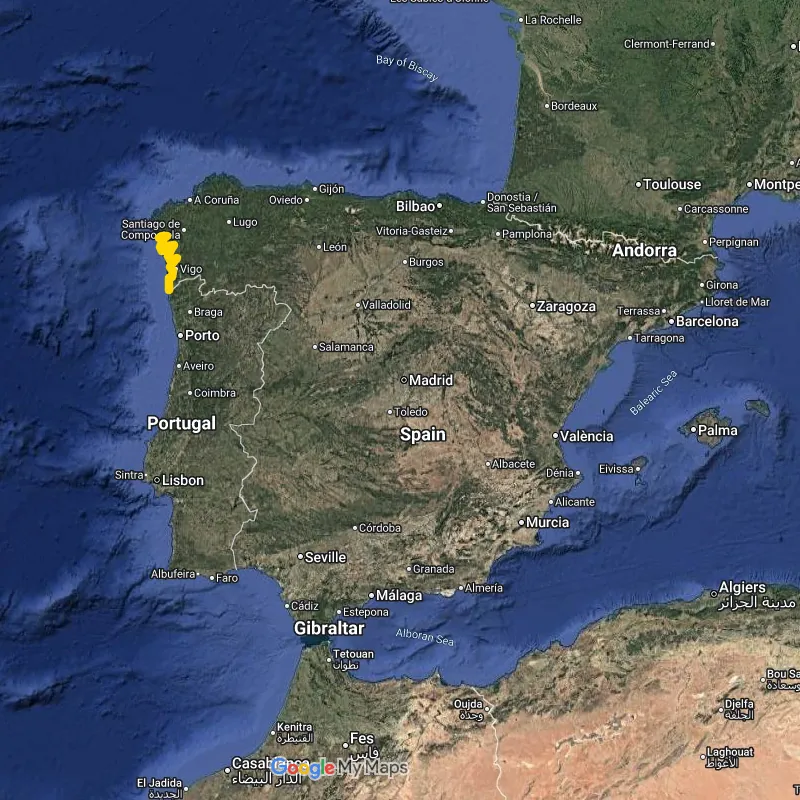
Runs from: A Guarda, at the Portuguese border, to the Ría de Muros e Noia.
The Rías Baixas are in Galicia. Four deep sea inlets, called rías, cut into the coast here. The seafood is superb, and it comes with crisp Albariño white wine. Vigo is the big city, and from there you can reach the Cíes Islands, which have a beach once voted one of the best in the world. Visitor numbers are capped, so book your ferry. Pontevedra has a lovely old centre, and Baiona has a fortress by the sea. The water is cold and the weather is changeable, but the scenery is great. The coastal route of the Portuguese Camino starts here.
Budget Accommodation On The Rías Baixas
Hostels listed on Booking.com and Hostelworld
For a full list of hostels, see our
Affordable Things To Do On The Rías Baixas
- Ferry to the Cíes Islands: Visitor numbers are capped in summer, so book your ferry and your permit early.
- Seafood in Vigo: Shuck-it-yourself oysters at O Berbés, and cheap raciones in the old town.
- Albariño tastings: Bodegas around Cambados offer cheap tastings of the local white wine.
- Pontevedra's museums: Cheap entry and a lovely old town to go with them.
- Island trips to Ons: Small boats run to a car-free island with a coastal trail, in season.
Free Activities On The Rías Baixas
- Pontevedra's old town: One of the best old centres in Galicia, and it's largely pedestrianised.
- Monte Santa Tecla: A hill with big views over the Miño river and the Portuguese border.
- Samil beach in Vigo: A long city beach that's free and right by the bus route.
- Baiona's coastline: A seafront walk past the fortress walls and the harbour.
- A Lanzada beach: Wide, wild beach on the Atlantic, popular with surfers.
Daytrips And Tours On The Rías Baixas
Costa da Morte
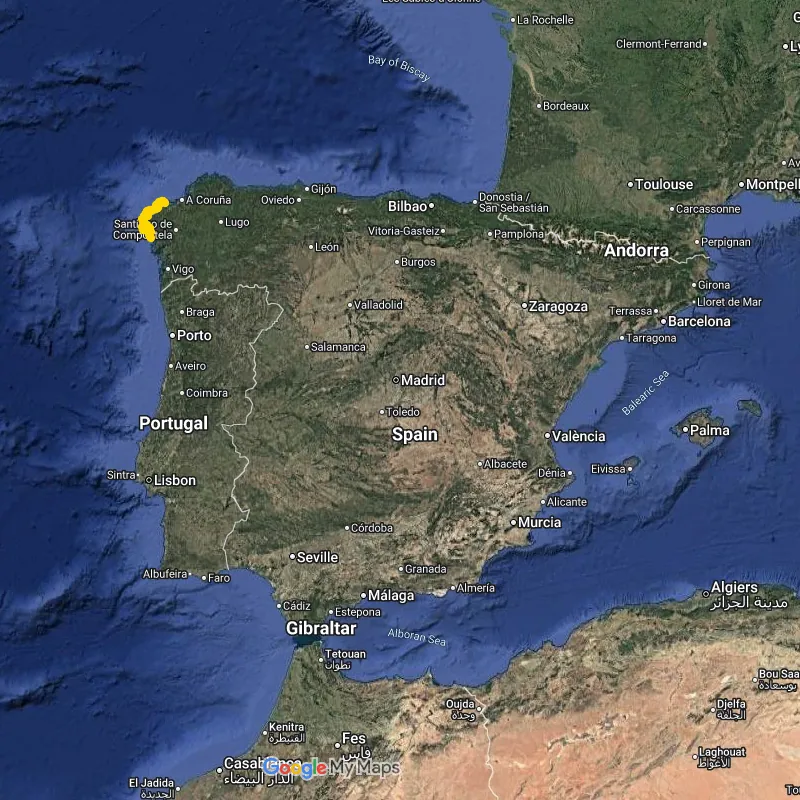
Runs from: Around Muros and Fisterra to Malpica. Sources disagree on the exact ends.
The Costa da Morte is in Galicia. The "coast of death" got its name from the many ships wrecked on its rocks. Today it's wild, empty and beautiful. Fisterra, once thought to be the end of the world, is where many pilgrims finish the Camino and watch the sunset. Muxía has a sea-battered church on the rocks. Carnota has one of the longest beaches in Galicia. The Camiño dos Faros is a long walking trail that links the lighthouses. Swimming can be dangerous here, because of strong currents, so check the flags.
Budget Accommodation On The Costa da Morte
Hostels listed on Booking.com and Hostelworld
For a full list of hostels, see our
Affordable Things To Do On The Costa da Morte
- Museo dos Naufraxios: A small museum near Cabo Vilán lighthouse about the area's many shipwrecks.
- Camariñas lace museum: A cheap look at the town's lace-making tradition.
- Local seafood: Fisterra and Muxía have fresh fish and shellfish, and the small harbour bars are the cheapest places to eat it.
- Local buses and bike hire: Distances are long and buses are rare, so bikes are a cheap way to see more.
Free Activities On The Costa da Morte
- Fisterra lighthouse: The "end of the world" at Km 0 of the Camino, and a famous sunset spot.
- Muxía: A sea-battered church on the rocks and the Pedra de Abalar.
- Carnota beach and the granary: One of the longest beaches in Galicia, plus the giant stone hórreo in the village.
- Cascada do Ézaro: A waterfall close to the sea, with a viewpoint above it.
- Camiño dos Faros: Walk any section of the lighthouse trail for free.
Daytrips And Tours On The Costa da Morte
Rías Altas
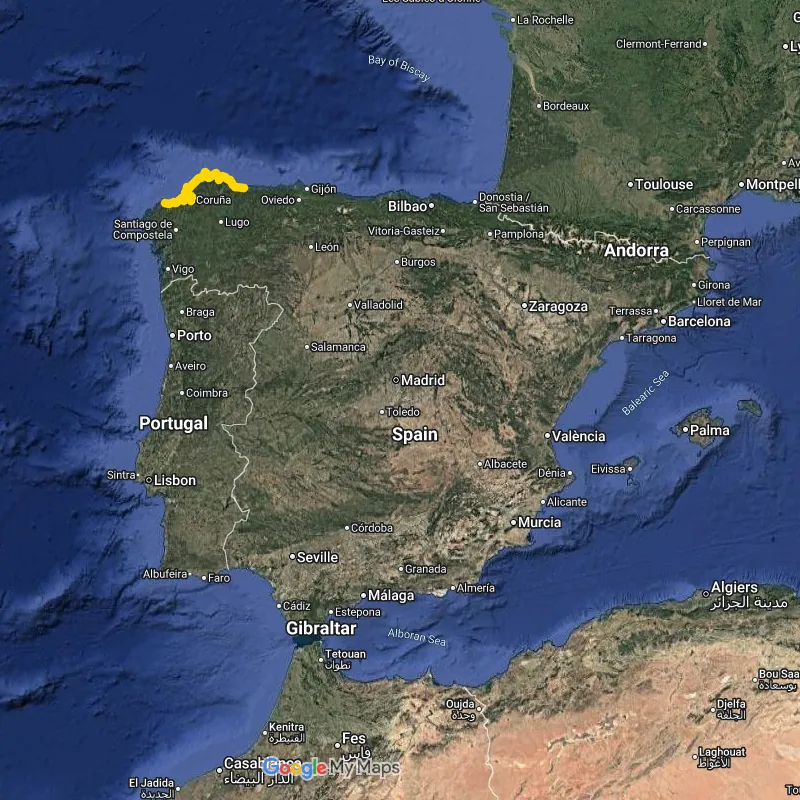
Runs from: Malpica and A Coruña to Ribadeo, at the Asturian border.
The Rías Altas are in Galicia. The northern rías have huge cliffs and green hills. A Coruña is a lively port city with a Roman lighthouse, the Tower of Hercules, that is still working today. Ferrol is where the English Way of the Camino starts. The cliffs at Serra da Capelada are among the highest sea cliffs in Europe. The Beach of the Cathedrals, near Ribadeo, has rock arches that you can only walk under at low tide, and it needs a free pass in busy periods. Surfers head to Pantín and Doniños.
Budget Accommodation On The Rías Altas
Hostels listed on Booking.com and Hostelworld
For a full list of hostels, see our
Affordable Things To Do On The Rías Altas
- Tower of Hercules: The Roman lighthouse still in use, with a UNESCO listing and a small entry fee.
- Castelo de San Antón: A small island fortress and museum in A Coruña's harbour.
- Surf lesson at Pantín or Doniños: Lessons are cheaper in the north-west than in most of Europe.
- Calle de la Franja: A street of cheap bars and raciones in A Coruña's old town.
Free Activities On The Rías Altas
- Beach of the Cathedrals: Free, but a pass is needed in busy periods, and you can only walk under the arches at low tide.
- A Coruña's Paseo Marítimo: A long seafront promenade round the headland, with views all the way.
- Serra da Capelada cliffs: Some of the highest sea cliffs in Europe, with a free viewpoint at Vixía de Herbeira.
- Ferrol's Magdalena quarter: A grid of modernist buildings and glass-fronted galleries.
- Pantín beach: A wide surf beach with a good chance of waves.
Daytrips And Tours On The Rías Altas
Costa Verde
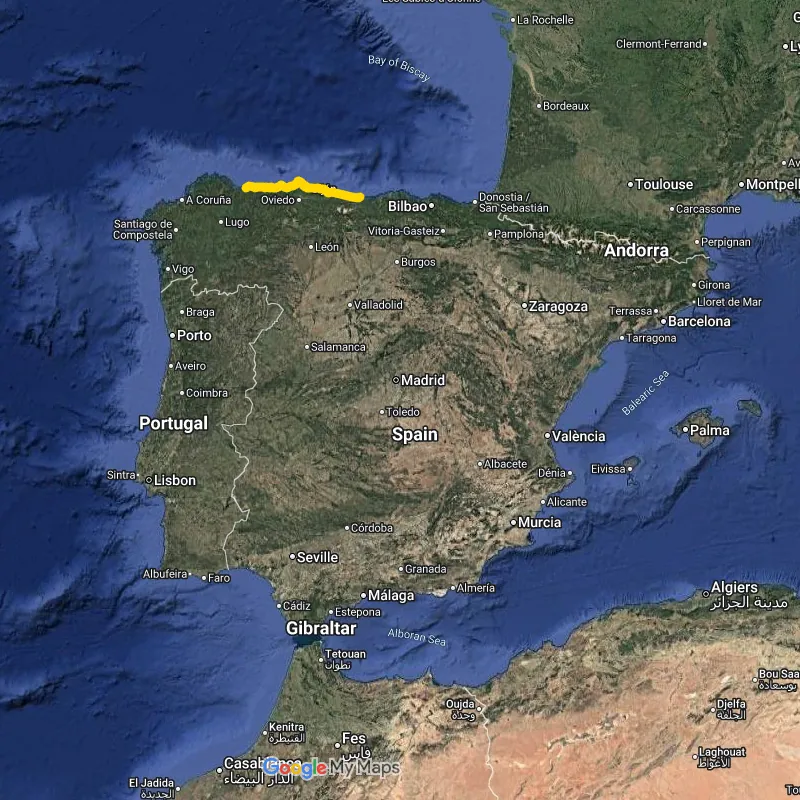
Runs from: Ribadeo, at the Galician border, to the Deva river, at the Cantabrian border.
The Costa Verde is in Asturias. The "green coast" gets its name from the rain, and the hills are bright green. Gijón is a fun city with a city beach, surf, student bars and cider poured from a great height. Cudillero is a fishing village that tumbles down a hillside. Near Llanes, Gulpiyuri is a tiny beach that sits inland and fills with sea water through tunnels. The Picos de Europa mountains are just behind the coast. Don't expect guaranteed sun, but do expect great food and cheap cider.
Budget Accommodation On The Costa Verde
Hostels listed on Booking.com and Hostelworld
For a full list of hostels, see our
Affordable Things To Do On The Costa Verde
- Tito Bustillo cave: Decorated Ice Age cave in Ribadesella, with limited daily places. Book ahead.
- Museo de la Sidra: A cider museum in Nava with a tasting included.
- Picos de Europa day trip: A bus to Covadonga's lakes is a cheap way into the mountains.
- Cider houses: Sidrerías serve cheap, big portions of food with the local cider.
- Canoeing the Sella: A river trip near Ribadesella, and the biggest event is the Sella Descent in August.
Free Activities On The Costa Verde
- Gulpiyuri: The famous tiny inland beach near Llanes, which fills with the tide through tunnels.
- Bufones de Pría: Blowholes on the cliffs near Llanes that shoot water high on stormy days.
- Gijón's San Lorenzo beach: A big city beach with surf, and the old fishermen's quarter beside it.
- Cudillero: A fishing village stacked in a bowl above the harbour.
- Ruta del Cares: A spectacular gorge walk in the Picos de Europa, free to enter.
Daytrips And Tours On The Costa Verde
Costa de Cantabria
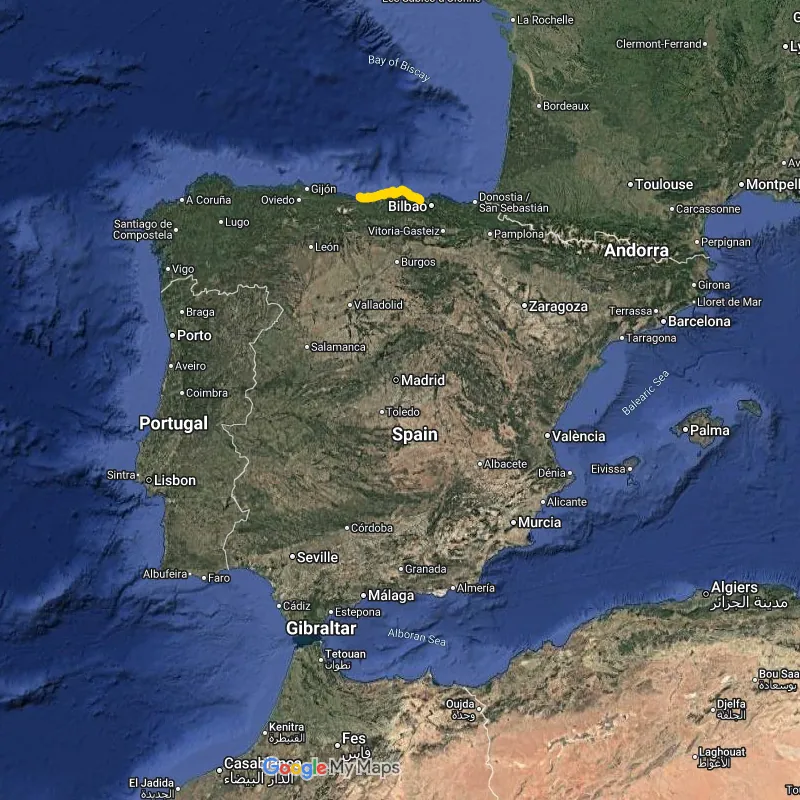
Runs from:The Deva river to Castro Urdiales, at the Basque border.
The Costa de Cantabria is in Cantabria. A friendly, relaxed coast with big beaches and green hills. Santander is an easy, elegant city with the beaches of El Sardinero. Across the bay, Somo is the surf hub, with surf schools and cheap places to sleep. Comillas has a fairytale house by Gaudí, and San Vicente de la Barquera is a pretty fishing port. Laredo and Noja have long beaches, and Santoña is famous for its anchovies. The Picos de Europa are close by for hiking.
Budget Accommodation On The Costa de Cantabria
Hostels listed on Booking.com and Hostelworld
For a full list of hostels, see our
Affordable Things To Do On The Costa de Cantabria
- Altamira Museum: A replica of the famous cave paintings near Santillana del Mar, with free entry at certain times.
- El Capricho de Gaudí: A fairytale house in Comillas with a modest entry fee.
- Surf lessons at Somo: The cheapest way into surfing in northern Spain, with lots of schools.
- Santander–Somo ferry: A cheap, scenic crossing of the bay.
Free Activities On The Costa de Cantabria
- El Sardinero: Santander's elegant beach and promenade.
- Península de la Magdalena: A park round a royal palace, with beaches and views over the bay.
- Monte Buciero, Santoña: A coastal walk with cliffs, a lighthouse and an old fort.
- Santillana del Mar: A beautiful medieval village that's free to stroll through.
- Oyambre beach: A long, quiet beach with dunes and surf.
Daytrips And Tours On The Costa de Cantabria
Costa Vasca (Basque Coast)
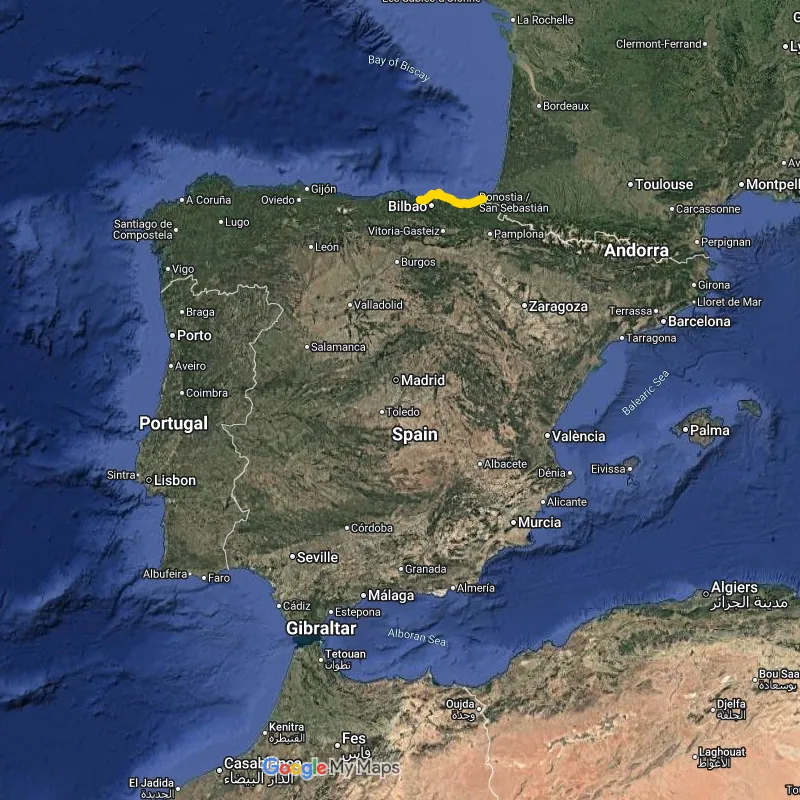
Runs from: Castro Urdiales boundary at the Cantabrian border to Hondarribia, at the French border.
The Costa Vasca is in the Basque Country. Wild cliffs, surf beaches and some of the best food in Spain. San Sebastián has a famous city beach and bars full of pintxos, which are small snacks served on bread. Mundaka has one of Europe's best surf waves. Gaztelugatxe is a tiny island with a hermitage at the top of 241 steps, and you need to book ahead. Zumaia has stunning layered cliffs. Bilbao, with its famous Guggenheim museum, is close to the coast. Prices are higher than elsewhere in Spain, and the weather can be wet.
Budget Accommodation On The Costa Vasca
Hostels listed on Booking.com and Hostelworld
For a full list of hostels, see our
Affordable Things To Do On The Costa Vasca
- Pintxo-pote: Cheap drink-and-snack deals in Bilbao and San Sebastián on set evenings, usually Thursdays.
- Monte Igueldo funicular: A cheap old funicular with the best view over La Concha bay.
- Surf lesson at Zarautz or Mundaka: Zarautz suits beginners, while Mundaka's wave is for experts.
- Flysch boat trip: Boats from Zumaia or Deba take you along the layered cliffs.
- Guggenheim Bilbao: Not cheap, but worth it if you love modern art. Check for discounts.
Free Activities On The Costa Vasca
- La Concha and Ondarreta: San Sebastián's famous city beach and the promenade round it.
- Monte Urgull: A wooded hill with an old castle and views, right by the old town.
- Peine del Viento: Eduardo Chillida's sculptures set into the rocks at the end of the bay.
- Bilbao's Casco Viejo and riverside: Seven streets of old town, and a walk along the river to the Guggenheim.
- Itzurun beach, Zumaia: A cove beneath the layered flysch cliffs.
Daytrips And Tours On The Costa Vasca
Further Reading
Ready to map out the rest of your trip? For more general info on backpacking Spain, see our comprehensive home page. We also highly recommend checking out our backpacking advice section to make sure you stay safe and save money on the road. If you need help structuring your travel routes, take a look at our suggested itineraries for Spain. For more info on backpacking, including access to our offline app and interactive PDF guide, head over to our resources page.
 SHARE