What Kind of Place Is This, Exactly?
The Balearic Islands are a group of islands in the western Mediterranean, off Spain's east coast. About 1.2 million people live here. The four main islands are Mallorca, the biggest, then Menorca, Ibiza and tiny Formentera. Palma, on Mallorca, is the capital. Ibiza and Formentera together are sometimes called the Pitiusas, or "pine islands". You can fly to Palma, Ibiza and Menorca, and ferries link all the islands to each other and to the mainland.
A Short History: Phoenicians, Pirates and Hippies
People built huge stone towers called talayots on Mallorca and Menorca more than 3,000 years ago. Carthaginian settlers founded Ibiza Town around 654 BC. The Romans arrived in 123 BC, and the Moors ruled for several centuries after that. King Jaume I of Aragon took Mallorca in 1229. Pirates raided the coasts for hundreds of years, which is why so many old watchtowers dot the cliffs. Hippies discovered Ibiza in the 1960s and stayed. In 1987 a group of British DJs came home from Ibiza with new ideas, and that helped spark the UK rave scene. The island has been the world's clubbing capital ever since.
The Language You'll Hear
Two official languages: Spanish and Catalan. Each island has its own version of Catalan, and you'll see it on road signs and menus. Almost everyone in the resorts speaks English, especially in Ibiza and Magaluf, so you can get by easily. Learn a few Spanish words anyway, and add two Catalan ones: "bon dia" for good morning, and "gràcies" for thank you. Locals notice, and they like it.
Ibiza or Eivissa? Mallorca or Majorca?
They're the same places with different spellings. Eivissa is the Catalan name for Ibiza, and you'll see it on road signs. Mallorca is the Spanish and local spelling, while Majorca is the old English one. The same goes for Menorca, which English speakers sometimes write as Minorca, and Mahón, which is Maó in Catalan. This guide uses the Spanish spellings, but if you searched for Majorca or Minorca, you're in the right place.
Understanding the Balearics: The Islands & Zones
Ibiza Town (Eivissa)
The island's main town has a walled old quarter called Dalt Vila, a UNESCO World Heritage Site. Steep streets lead up to the cathedral and the views. Down by the harbour, bars and restaurants stay busy until late, and the stylish crowd poses for the cameras. The Pacha club is in the town itself.
Sant Antoni (San Antonio)
The classic party town for young British travellers. It has the "West End" strip of loud bars and street promoters, plus the famous sunset strip along the bay, where crowds watch the sun go down with a drink. It's cheaper and rowdier than Ibiza Town, and it has the most budget beds on the island.
Playa d'en Bossa & The Big Clubs
A long beach next to Ibiza Town, lined with huge hotels and beach clubs. This is where the big daytime parties happen. Many of the island's most famous nightclubs are close by, including Hï Ibiza and DC10, and Amnesia is a short drive away. It's loud, packed and expensive.
Ibiza's Quiet North & East
Away from the clubs, Ibiza is a different island. Pine forests, small coves and sleepy villages fill the north and east. Santa Eulària and Es Canar are calm family spots with hippy markets. Benirràs beach is famous for its Sunday sunset drummers. Hire a scooter or take a bus to find them.
Mallorca
The biggest island has something for everyone. Palma is a lovely city with a huge cathedral, old streets and a lively food and bar scene. Magaluf and Playa de Palma are the party resorts, with cheap drinks and a big British crowd. The Serra de Tramuntana mountains are a UNESCO World Heritage Site, and they're great for hiking and cycling. The east coast has pretty coves with clear turquoise water.
Menorca
The quiet, green island. It's a UNESCO Biosphere Reserve with fewer high-rise hotels, calm beaches and lots of countryside. The old towns of Maó and Ciutadella have harbours full of small bars. Britain ran Menorca for much of the 18th century, and you can still see it in the Georgian buildings and the local gin.
Formentera
Ibiza's tiny neighbour is only a short ferry ride away. It has some of the whitest sand and clearest water in Europe. It's flat and easy to explore by bike, with beach bars and not much else. Many people come for a day trip from Ibiza, and some stay a few nights to recharge.
A Note on Ibiza's Party Scene
Ibiza's clubbing season runs from about May to early October, with opening parties at the start and closing parties at the end. The biggest names play at Pacha, Amnesia, DC10, Hï Ibiza and Ushuaïa, and line-ups change every year. Big clubs are expensive and take over your whole night, so plan ahead, buy tickets early and don't expect to fit more than a few big nights into a week.
Balearic Islands FAQs for Backpackers
When is the best time to go?
May, June and September are best. The weather is warm, the clubs are open and prices are lower. July and August are the hottest, busiest and most expensive months, and beds can run out. Clubs close from early October until May, and many beach bars and small hostels shut with them. Winter is quiet, mild and good for hiking, but not for partying.
Which island should I pick?
For the parties, pick Ibiza. For a mix of city, mountains and beaches, pick Mallorca. For quiet, empty coves, pick Menorca. For white sand and a slow pace, pick Formentera. Many backpackers fly into Palma or Ibiza, then hop to a second island by ferry or a cheap flight.
Can I really do Ibiza on a budget?
Yes, but you need a plan. Book your hostel months ahead. Buy drinks and snacks at a supermarket instead of a beach bar. Buy club tickets online in advance, because they cost more on the door. Go to a daytime party instead of a night one, eat a cheap set lunch, and take the bus instead of a taxi. Finally, spend sunsets on free beaches.
What does it cost to go out?
In an ordinary bar, a small beer costs about €3 to €5. Inside a big club, a single drink can cost €15 or more. Tickets for the biggest Ibiza clubs often start at €50 to €100, and they rise for star DJs. Magaluf and Playa de Palma are cheaper, and Palma's local bars are cheaper again.
How do I get around?
Each island has a bus network that covers the main towns and beaches, and some run a night bus to the big clubs in summer. Taxis are hard to find at closing time and cost a lot. Ferries link the islands, and Formentera is about 30 to 40 minutes by fast ferry from Ibiza Town. For hidden coves, share a hire car with people from your hostel. Think hard before you hire a scooter, and read our safety section first.
Do I need to speak Spanish?
Not much. English is common in the resorts and the clubs, and most hostel staff speak it well. Away from the tourist areas, Spanish or Catalan helps. A few words go a long way.
Is the tap water safe?
It's generally safe, but it can taste salty, especially on Ibiza and Formentera, where fresh water is scarce. Most people drink bottled water. Please don't waste water, as the islands often struggle in summer.
Is it safe?
Mostly, yes. Violent crime against tourists is rare. The real dangers come from partying: drugs, heavy drinking, hot weather, balconies and scooters. See our full safety section below, and please read the part about drugs.
Staying Safe & Travelling Well in the Balearic Islands
The Balearics are safe for most backpackers. Violent crime is rare, and the police are used to young tourists. Most of the risks come from the party scene itself, and from the heat. A little common sense keeps your trip fun.
Drugs: The Straight Talk
Ibiza's club scene means drugs will be offered to you. Dealers approach people on the street, outside clubs, on beaches and around Sant Antoni's West End. Please don't buy from them. Pills and powders sold as MDMA, cocaine or ketamine are often something else, or far stronger than you expect. Every summer, young tourists end up in hospital, and some die. Mixing drugs with alcohol, heat and no sleep makes it much worse. So-called "pink cocaine" is not a single drug at all, and nobody can tell you what is in it.
The law is serious too. In Spain, using or carrying drugs in public can bring an on-the-spot fine, starting at €601 and rising to €30,000. Police search people near clubs and beaches. Selling drugs, even to friends, can mean prison. Spain is not as relaxed about this as some visitors think. If you choose to take drugs, you take the risks yourself, and your travel insurance may not pay out.
Look after your friends. If someone is very unwell, call 112 at once, stay with them and tell the medics what they took. They are there to help, not to judge. Never leave your drink alone, and watch for spiking, which can happen in any crowded bar or club.
Alcohol and Party-Zone Rules
Ibiza and Mallorca have rules for some party areas, including Sant Antoni, Playa d'en Bossa, Magaluf and Playa de Palma. These can limit late-night alcohol sales in shops, open bars, organised pub crawls and party boats. Drinking in the street can bring a fine. The rules change, so ask at your hostel. Spain's drink-drive limit is also lower than in England and Wales, so don't drink and drive.
Balconing: Please Don't
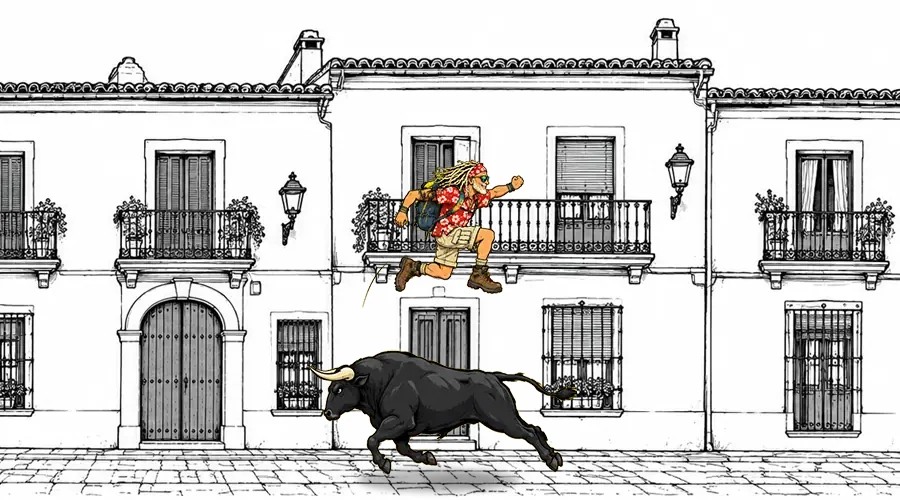
Balconing means jumping from, or climbing between, hotel and apartment balconies, often towards a pool. It has killed and badly injured many tourists, mostly young men, in Magaluf, Sant Antoni and Playa de Palma. It looks like a dare, but it's a very quick way to end your holiday. Your insurance may refuse to pay, and you can be thrown out of your accommodation.
Heat, Sun and Water
Summer is hot, and the sun is stronger than you think, especially after a late night. Use high-factor sunscreen, drink lots of water and take breaks in the shade. Cliff jumping is popular but dangerous, so never jump after drinking, and check how deep the water is first. Check the beach flag as well: green means fine, yellow means take care, and red means stay out.
Scooters and Quad Bikes
Accidents are common among tourists, and the roads are busy and unfamiliar. You need the right licence, and a helmet is the law. Insurance may not pay if you've been drinking or aren't properly licensed. Many hire shops take a big deposit and charge for scratches, so take photos of the bike before you leave.
Tickets, Taxis and Petty Theft
Fake club tickets are sold online and on the street. Buy from the club's own website or from an official partner. Use licensed taxis, and agree on the route before you get in. Phones and wallets get stolen from unattended beach towels and crowded dance floors, so use lockers and keep your valuables close.
Looking After the Islands
Local people have protested against overtourism in recent summers, and housing and water are real problems. Be a good guest. Keep noise down at night and take your rubbish home. Don't walk around town in swimwear, as some places fine you for it. Don't sleep on beaches or camp in the wild, because it's illegal and can bring a fine. Never anchor or swim over the seagrass meadows, which protect the water and are protected by law. A small tourist tax is charged on most accommodation, including hostels, so keep a few euros ready.
Further Reading
Ready to map out the rest of your trip? For more general info on backpacking Spain, see our comprehensive home page. We also highly recommend checking out our backpacking advice section to make sure you stay safe and save money on the road. If you need help structuring your travel routes, take a look at our suggested itineraries for Spain. For more info on backpacking, including access to our offline app and interactive PDF guide, head over to our resources page.














 SHARE