

Welcome to my backpacking guide to Cantabria!

Discover more

Backpacking Cantabria

[kahn-TAH-bryah]

Fourteen thousand years before anyone had heard of the Sagrada Família, someone was already painting masterpieces in Cantabria. The bison at Altamira cave are so anatomically precise, so confidently drawn, that when the paintings were first properly documented in 1879, experts refused to believe cave-dwelling humans could have made them and dismissed the whole discovery as a hoax for decades. That's Cantabria in one story: a region that's been quietly world-class at things for millennia, and just as quietly gets skipped by almost everyone touring Spain.

Wedged between Asturias and the Basque Country, Cantabria gets overshadowed by both, which is a genuine shame — it has its own share of the Picos de Europa, a genuinely elegant seaside capital in Santander, and a coastline that swings between grand Belle Époque beaches and wild surf breaks within a few kilometres of each other. It's an easy, natural add-on if you're backpacking along the north coast between San Sebastián or Bilbao and Asturias or Galicia, and rewarding enough to justify a dedicated stop on its own.

Budget-wise, Cantabria sits comfortably in the affordable end of backpacking Spain — cheaper than the Basque Country, with hostels, food, and activities all priced kindly, and noticeably fewer crowds competing for beds even in peak summer. For backpackers who want the Green Spain scenery without the Basque Country's price tag, this is where you come.

Read More

What Kind of Place Is This, Exactly?

Cantabria is one of Spain's smaller autonomous communities, and — like Asturias, Madrid, Murcia, La Rioja, and Navarre — one of only a handful made up of a single province rather than several. Santander, its capital, sits on a broad natural bay on the Bay of Biscay coast, with the Picos de Europa rising sharply inland along the region's southern edge, shared with neighbouring Asturias and Castile y León.

A Short History: Cave Painters, Roman Conquerors, and a Royal Summer House

Cantabria's history starts astonishingly early: the paintings at Altamira, discovered in 1879, are roughly 36,000 years old and remain some of the finest examples of prehistoric art anywhere on Earth — often called "the Sistine Chapel of Palaeolithic Art." Millennia later, this same rugged terrain gave Rome one of its hardest fights in the entire empire: the Cantabrian Wars (29–19 BC) took years of brutal campaigning, and even the Emperor Augustus himself, to finally subdue the fiercely independent local tribes.

Cantabria's modern identity owes a lot to a much more recent event: in the early 20th century, the Spanish royal family chose Santander as their summer residence, building the Palacio de la Magdalena on its own peninsula overlooking the bay. That royal seal of approval turned the city into an elite Belle Époque resort almost overnight, a legacy still visible in its grand seafront architecture today.

The Language You'll Hear

Just Castilian Spanish here — unlike every one of its neighbours, Cantabria has no separate co-official regional language, only some local dialectal quirks (sometimes called Cántabru) with no real institutional push behind them. English is spoken reasonably well in Santander's tourist areas, less so further out.

Understanding Cantabria: The Zones

Santander

An elegant, walkable seaside capital built around the grand curve of El Sardinero beach, the Magdalena Peninsula's royal palace grounds, and Centro Botín — a striking Renzo Piano-designed contemporary art museum jutting out over the bay.

Altamira & Prehistoric Cantabria

The original Altamira cave has been closed to general visitors for decades to preserve the paintings, but the Neocueva — an astonishingly precise full-scale replica — sits right next to it near Santillana del Mar, alongside several other genuinely accessible prehistoric cave sites nearby.

Santillana del Mar & Comillas

Santillana del Mar is a flawlessly preserved medieval village, often called (only half-jokingly) "the prettiest village in Spain, despite having neither saints, nor land, nor sea." Nearby Comillas holds El Capricho, one of Antoni Gaudí's earliest works and virtually his only building outside Catalonia — a fun full-circle moment if you've already been through Barcelona.

The Picos de Europa (Cantabrian Side)

Cantabria's share of the mountain range everyone associates with Asturias — Fuente Dé's cable car and the town of Potes make an excellent, less crowded base for exploring the same dramatic peaks.

Cabárceno Natural Park

A genuinely unusual open-air wildlife park built inside a former mining quarry, where bears, elephants, and rhinos roam semi-free across the old excavated terrain — an odd, memorable half-day out unlike anything else in the region.

Cantabria FAQs for Backpackers

When is the best time to go?

June to September gives the best odds of good beach and hiking weather — pack for rain regardless, since this is Green Spain and it can turn any day.

Should I base myself in Santander?

Yes, for most backpackers — it's compact, well-connected by bus and train to the rest of the region, and has the best hostel selection by far.

Can I actually visit the real Altamira cave?

No — the original cave has been closed to the general public since 2002 to protect the paintings from humidity and CO2 damage caused by visitors. The Neocueva replica beside it is remarkably faithful and is genuinely worth the visit in its own right; a very limited weekly lottery for real-cave access exists but isn't something to plan a trip around.

Do I need to speak Spanish?

Spanish covers you everywhere. English is spoken reasonably well in Santander, less so in smaller towns.

How do I get around?

Buses and trains connect Santander to Santillana del Mar, Comillas, and the coast easily. The Picos de Europa and Cabárceno are best reached by bus (limited) or rental car.

Is the tap water safe?

Yes, throughout Cantabria. Perfectly safe to drink.

Is Cantabria safe?

Yes — genuinely one of the safest, lowest-crime regions in Spain. See our full safety section below.

Staying Safe & Travelling Well in Cantabria

Cantabria is a low-crime, low-hassle region for backpackers, with no pickpocketing reputation to speak of. As with its neighbours, the real safety considerations here are about weather and terrain, not people.

Mountain Weather in the Picos

Conditions in the Cantabrian Picos can shift fast even in summer — check forecasts before any serious hike, carry proper layers, and don't push on into deteriorating weather on exposed ground.

Surf and Beach Safety

Cantabria's Atlantic beaches carry real currents and swell, particularly on the more exposed surf breaks — respect flag warnings and local advice, and take a lesson before paddling out if you're new to it.

Weather and Layering

Like the rest of Green Spain, rain is a genuine possibility whatever the season. Bring a proper waterproof layer.

Petty Theft

A minimal issue here compared to Spain's bigger cities, though standard precautions are still sensible in Santander's busier bars and beach areas during peak summer.

Further Reading

Ready to map out the rest of your trip? For more general info on backpacking Spain, see our comprehensive home page. We also highly recommend checking out our backpacking advice section to make sure you stay safe and save money on the road. If you need help structuring your travel routes, take a look at our suggested itineraries for Spain. For more info on backpacking, including access to our offline app and interactive PDF guide, head over to our resources page.

An illustration of two backpackers surrounded by the attractions of Cantabria

Quick Facts

Best Time To Visit:
June to September for the best beach and hiking weather — pack for rain regardless, this is Green Spain.

Best For:
Prehistoric cave art, elegant beaches, mountains, and a genuinely underrated stretch of Green Spain.

Most Popular Experience:
The Altamira Neocueva and a wander through Santillana del Mar.

Most Under-rated Experience:
Cabárceno Natural Park — a former mining quarry where bears and elephants now roam semi-free.

Best Free Experiences:
El Sardinero beach, the Magdalena Peninsula grounds, and wandering Santillana del Mar's medieval streets.

Ideal Stay:
4–5 days to cover Santander, Altamira/Santillana del Mar, and at least one day in the Picos.

Budget Level:
Cheaper than the Basque Country, similar to Asturias. Expect roughly €35–€70 per day.

Getting Around:
Buses and trains connect Santander to the coast easily; a rental car is the best way to properly explore the Picos and Cabárceno.

Best Photo Spots:
El Sardinero at sunset, the Neocueva's painted ceiling, Santillana del Mar's stone streets, and the view from Fuente Dé's cable car.
GRASSLAND IN VALDÁLIGA | By Serdio - Own work, CC BY-SA 3.0, Link
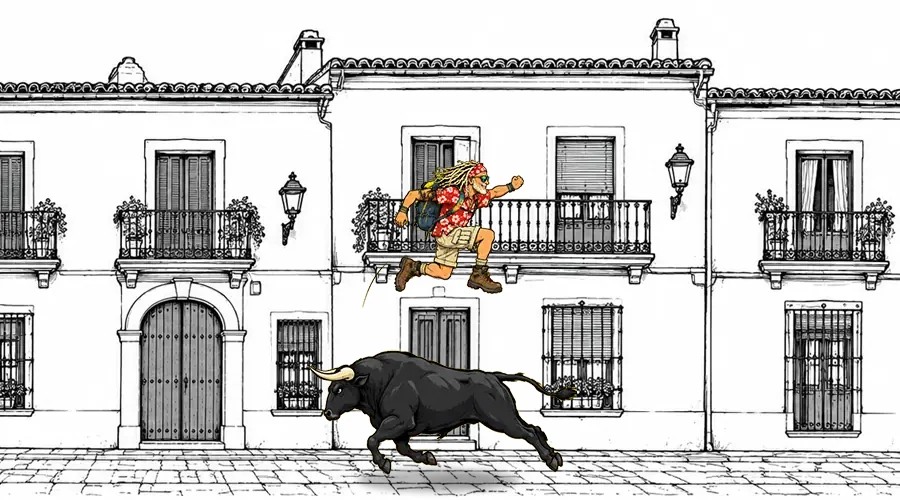
The Backpackers Bible guru, a dreadlocked backpacker in a Hawaiian shirt, leaping over a charging black bull on a cobbled street in Spain

Things To Do In Cantabria

Search Cantabria Attractions and Tours

Interactive tourist attraction and tour map for Cantabria showing things to do for backpackers.
Tours in Cantabriaon GetYourGuide ↗
Discover the best things to do, attractions, and backpacker tours in Cantabria. Use two fingers to move the map, pinch to zoom.

1. Altamira & Prehistoric Cantabria (Non-Negotiable)

This is genuinely one of the most extraordinary things you can see in Spain, and most backpackers touring the country have never heard of it.

The Altamira Neocueva

A meticulously accurate full-scale replica of the original cave, built right beside it near Santillana del Mar — 36,000-year-old bison, deer, and horses rendered with startling anatomical precision. Known as "the Sistine Chapel of Palaeolithic Art" for good reason. Entry from roughly €5.

Read More

El Castillo & Las Monedas Caves

Near Puente Viesgo, these are genuine, original prehistoric caves you can actually enter — home to some of the oldest confirmed cave art anywhere on Earth, including hand stencils dated to over 40,000 years ago.

The Real Altamira Cave (Lottery Access)

A very limited weekly lottery allows a handful of visitors into the actual original cave — worth entering if you're around long enough, but not something to build a trip around, since odds are low and demand is high.

2. Adrenaline

Surfing Somo and Liencres: Cantabria has a genuinely strong surf scene, with beginner-friendly breaks and board hire widely available a short ferry or drive from Santander.

Via ferrata and hiking in the Picos: The Cantabrian side of the range offers the same dramatic climbing and hiking as the Asturian side, with noticeably fewer crowds.

Cabárceno Natural Park: A genuinely unusual half-day out — an open-air wildlife park built inside a former mining quarry, where bears, elephants, and rhinos roam semi-free across the old excavated terrain.

3. Santillana del Mar & The Coast

Most backpackers stick to Santander and never make the short trip out to this stretch of coast — a genuine shame, since it's some of the prettiest, least crowded scenery in northern Spain.

Santillana del Mar

A flawlessly preserved medieval village of stone houses and cobbled lanes, often called "the prettiest village in Spain" — easily combined with a visit to the nearby Altamira Neocueva.

Comillas

Home to El Capricho, one of Antoni Gaudí's earliest works and virtually his only building outside Catalonia — a genuinely fun full-circle moment if the rest of your trip has taken you through Barcelona.

4. Free Cantabria (Zero Euros)

El Sardinero beach: Santander's grand Belle Époque beach, free, public, and lined with elegant seafront architecture.

The Magdalena Peninsula: The former royal summer palace grounds are free to walk, with sweeping views back across the bay to Santander.

Santillana del Mar's streets: Wandering this medieval village costs nothing and is genuinely one of the best free experiences in the region.

Centro Botín's exterior and plaza: You don't need to pay to admire Renzo Piano's striking building from outside, or to enjoy the public plaza beneath it.

5. Nightlife: How It Actually Works

Santander runs on a summer-resort rhythm — busiest and liveliest from June to September, when the city's student population is joined by Spanish holidaymakers filling out the bars around the old town.

For a first drink

The streets around Plaza Cañadío and Calle Peña Herbosa are the classic starting point, packed with bars and a young, mixed crowd.

For something more local

Head into the old fishing quarter around Puerto Chico for a quieter, more local scene away from the main strip.

For clubbing

Santander's late-night scene is modest but decent in summer, clustered around the same central streets — don't expect Madrid-level intensity, but a genuinely good night out.

6. The Big Hits (Things You Must Not Skip)

The Altamira Neocueva

Already covered above, but it bears repeating — the single essential sight in the entire region.

Santillana del Mar

Covered in full above — one of the prettiest villages in Spain, and an easy pairing with Altamira.

Centro Botín

Santander's striking contemporary art museum, floating over the bay on stilts — worth going inside for the exhibitions, or just admiring from the plaza below.

Cabárceno Natural Park

Covered in full above — a genuinely unusual half-day out unlike anything else in the region.

7. Live Sport & Culture

Racing de Santander: The region's biggest football club, with a loyal local following — a genuinely good, comparatively affordable way to catch live Spanish football depending on the division that season.

Surfing competitions at Somo: Cantabria's surf scene hosts regular local and national competitions through the summer — worth checking the calendar if you're around, even just to watch.

A cartoon of the travel guru and a male and female having a picnic in Cantabria. They do not notice that a cow is eating their lunch.

Top-Rated Cantabria Tours on GetYourGuide.com

TYPICAL LANDSCAPE | By Adbar - Own work, CC BY-SA 3.0, Link

Budget Accommodation In Cantabria

Hostels listed on Booking.com and Hostelworld

For a full list of hostels, see our

Where Do You Want To Go Next?